


How Tunnel Crews Can Use Laser Alignment Tools More Efficiently
Most tunnel crews think alignment tools are just about staying on track. Point the laser, follow the beam, dig the hole. But the job demands more than that — and if you're not treating these instruments like the precision equipment they are, you're asking for rework. Laser tools may keep you straight, but they don't fix sloppy setup or lazy documentation. Especially when tolerances are tight and schedules are tighter.
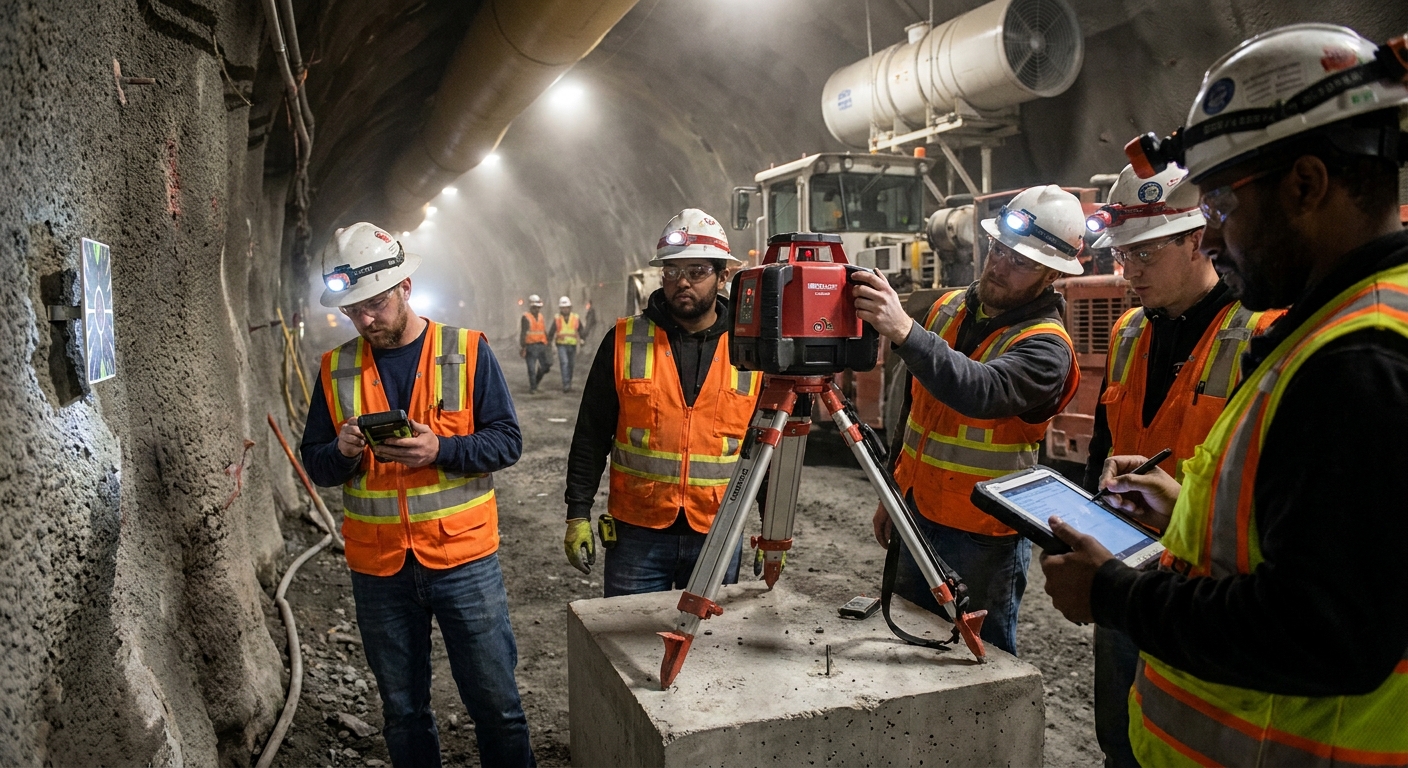
So here's the reality. If you're boring underground to move people or water or power, that's critical infrastructure. Just don't treat the laser like it runs itself. Every setup should be verified. Every reading needs context. And every alignment decision should be grounded in what the tool tells you — not what the foreman assumes from memory.
When the Beam Drifts and Nobody Notices
Nine times out of ten, alignment issues aren't the laser's fault. You set it up, you lock it down, you assume it holds — that's standard procedure. The tool doesn't lie, but it does shift if the tripod's weak or the ground settles.
But if nobody checks it mid-shift? Different story. A beam that drifts even half a degree can put you meters off target by the time you break through. We've seen crews lose days because they trusted yesterday's setup. Plenty of foremen thought calibration was optional — it's not. And when the survey crew flags your line, the entire schedule pays the price unless you catch it early with routine verification.
The Checks That Actually Matter
You can't skip the setup and expect clean results — that's just hoping for luck. But the verification process? That's often where efficiency lives. Most crews know to level the tool and sight the target, but the follow-through separates the pros from the rest.
Here's where discipline pays off:
- Pre-shift calibration gets everyone on the same baseline and catches drift before the first cut
- Mid-shift spot checks confirm the beam hasn't moved since setup, especially after blasting or heavy equipment passes
- Target visibility matters more than crews admit — dirty reflectors or dim conditions kill accuracy fast
- Backup measurements with a total station or hand level give you proof when the numbers look wrong
- Environmental adjustments for dust, moisture, or temperature swings keep the beam visible and the readings honest
When the Setup Gets Rushed
Want to trust your alignment? You'll need to prove the tool was placed right — and that you verified it before cutting. The best laser in the world won't save you from a bad foundation or a crooked mount.
We look for three things on every setup:
- Stable base that won't shift under vibration or foot traffic
- Clear line of sight without obstructions or reflective surfaces that bounce the beam
- Documented reference point so the next crew knows where you started and why
Miss one of those, and the alignment's already suspect. Even if the laser's showing green and the numbers look clean. And if the tool got bumped during the shift? That section's questionable until someone re-checks it. No shortcuts for a quick advance when the bore's off by a meter.
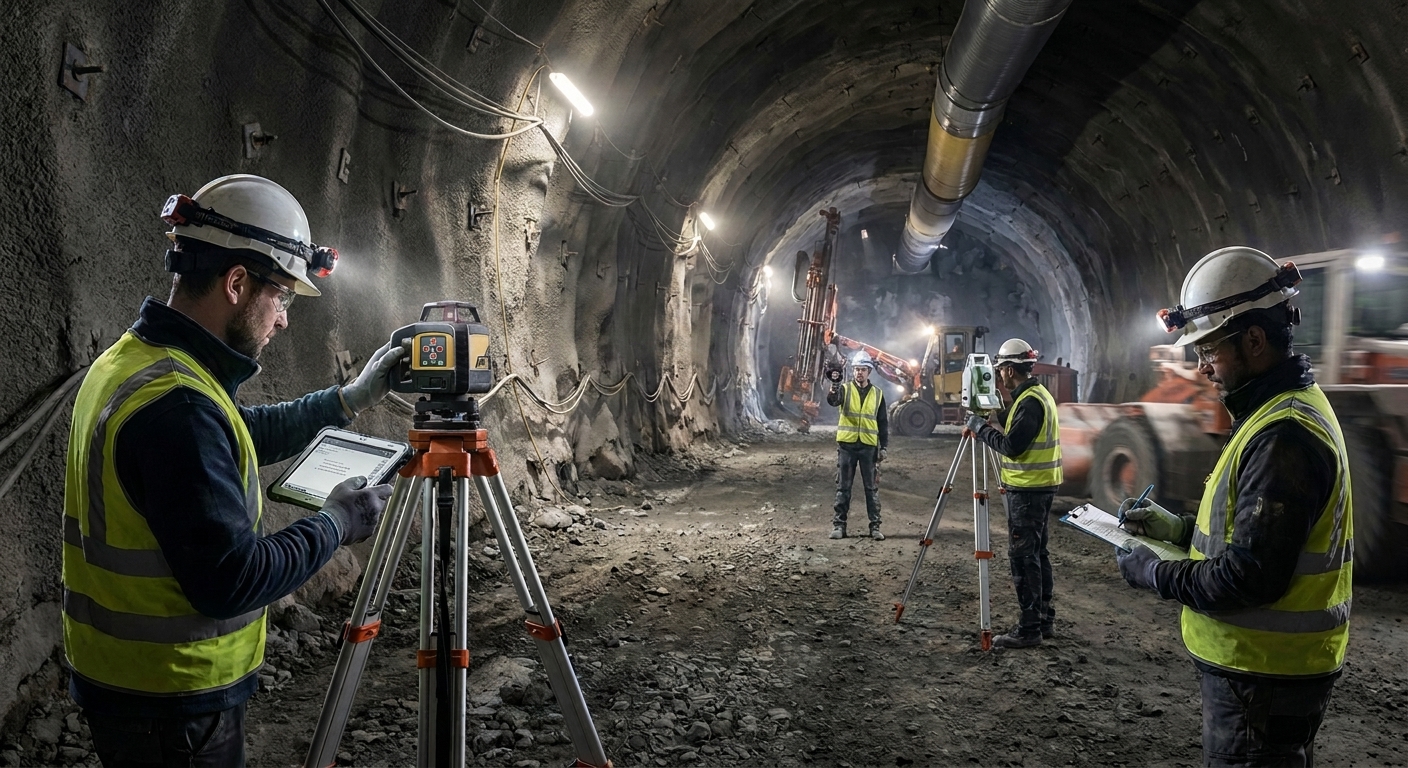
Visibility Drops When Dust Climbs
If your tunnel's kicking up dust or dealing with moisture, the laser beam can vanish before it hits the target. That's not a tool failure — that's environment. You'll need more than standard settings to punch through low-visibility conditions.
Crews that work dirty tunnels know the drill:
- Boost the laser intensity if the model supports it, or switch to a more powerful unit rated for harsh sites
- Use detector cards or electronic targets instead of relying on the naked eye
- Position ventilation to push dust away from the beam path, even if it's just a temporary fan
- Clean optics and reflectors between shifts because a dirty lens cuts visibility faster than fog
Documentation Keeps the Record Straight
Want to prove your alignment held? Show the log. You'll need more than memory and a foreman's signature to back up your line if the survey comes back red.
Here's what the file should contain:
- Setup time, location, and reference coordinates for every laser placement
- Calibration records with serial numbers and any adjustments made during the shift
- Spot check results including time, distance, and any deviations noted
- Photos of the setup and target alignment, especially when working around curves or grade changes
If the project manager or client audits the work, they won't just take your word that everything stayed true. Mixing rough estimates with precision tools is one of the fastest ways to lose credibility. So if that excavator nudged the tripod and nobody logged a re-check, you'd better have a backup measurement to prove the line held.
Where Most Crews Drop the Ball
Assuming the Laser's Always Right
Treating the tool like it's infallible? That's how sections get excavated off-line. The laser's only as good as the setup and the conditions. Most crews stay sharp by cross-checking with traditional surveying methods — and plenty keep their edge by catching mistakes before the concrete goes in.
Skipping the Pre-Shift Check
Don't wait until you're halfway through the advance to realize the beam shifted overnight. If you skip morning calibration, you're gambling with the day's progress. Reconcile alignment every shift. It's five minutes. It works.
Ignoring the Environment
If dust, heat, or vibration changed since yesterday, your laser might behave differently today. That's a red flag zone. If you didn't adjust your setup or verification routine to match conditions, the readings may not reflect reality. Check the manual and adapt — that's what pros do.
Alignment Runs on Routine and Attention
Using a laser alignment tool isn't the hard part. Trusting it without verification — and defending your line when someone questions it — that's where crews get burned. There's no excuse for skipping checks when the tools are built to be accurate. But there's also no forgiveness when you let the setup slide and bore off course.
We help tunnel crews do more than hit their marks. We help them work with precision — with clarity, discipline, and an understanding of what efficient alignment means for schedule, safety, and final acceptance. For more information on tunneling safety equipment or communication tools for tunneling, explore our resources and products.
Let’s Get Your Crew Aligned
Every tunnel project deserves the confidence that comes from precise alignment and reliable documentation. If you want to keep your team moving forward without costly rework, let’s talk about how we can support your next job with the right tools and expertise. Call us at 800-523-1579 or contact us today to get started.
‹ Back
Recent Posts
-
Best Two-Way Radio Systems for Rock Quarries & Aggregate Operations
October 13, 2026
-
Two-Way Radios vs. Cell Phones - Which Is Better for Farm Communication?
September 29, 2026
-

Can One Two-Way Radio System Cover Multiple Farms & Fields?
September 15, 2026
-

Do Farms Need an FCC License for Two-Way Radios?
September 1, 2026
-
When Should Mine Page Phones Be Serviced or Replaced?
August 18, 2026