

Can One Two-Way Radio System Cover Multiple Farms & Fields?
Most agricultural operations think radio coverage is just about buying the right equipment. Pick a frequency, power up, and hope for the best. But the reality is messier than that — and if you don't understand how terrain, power, and infrastructure interact, you're setting yourself up for dead zones and missed communications. A two-way communication system might work flawlessly on one property, but stretch it across multiple farms and suddenly you're dealing with gaps that cost you time, safety, and control.
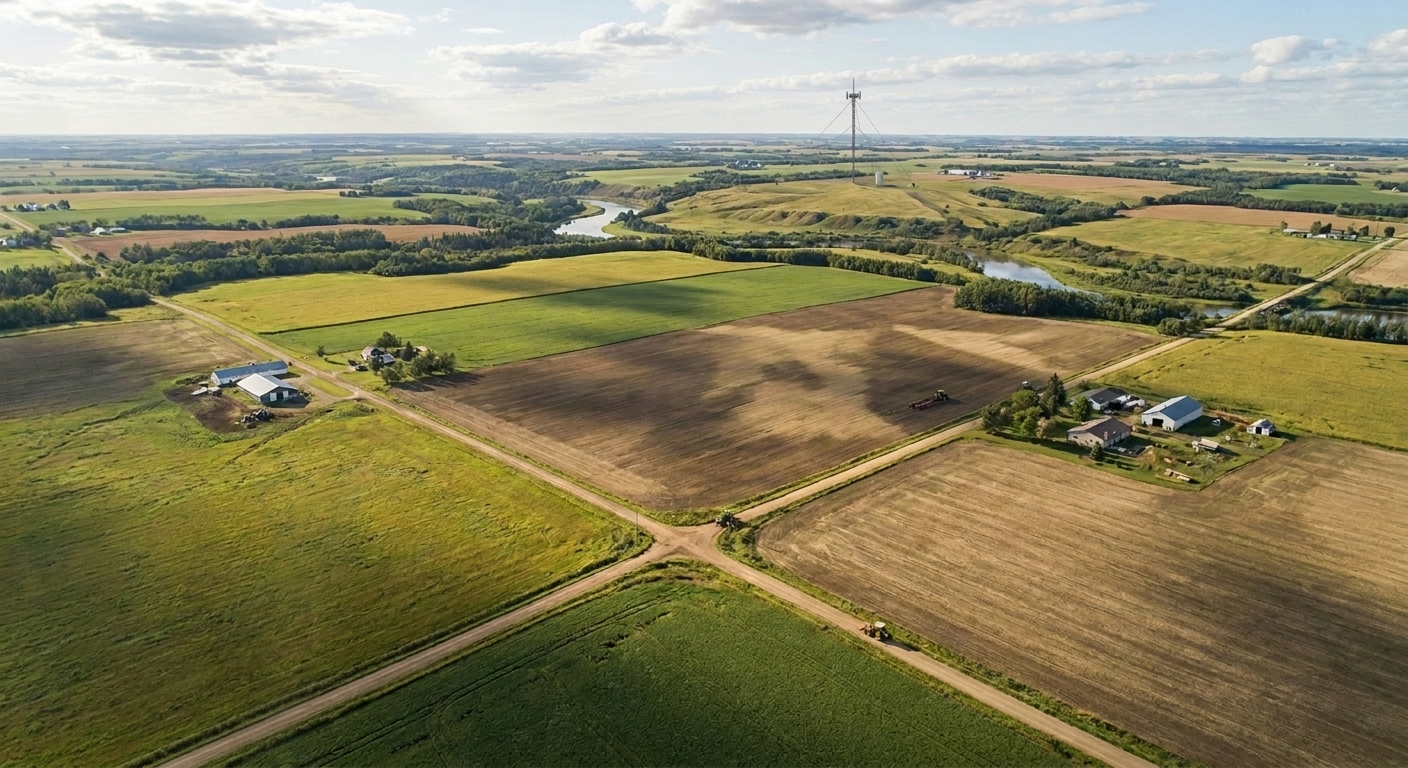
So here's what matters. If you're running operations across separate fields or distant parcels, coverage isn't automatic. Every hill, tree line, and mile of distance works against your signal. Every decision about frequency, antenna placement, and repeater deployment should be grounded in how your land actually behaves — not just how it looks on a map.
Range Isn't What the Box Says
Walk into any store and you'll see two-way radios advertising five miles, ten miles, even twenty miles of range. That's marketing, not reality. Those numbers assume perfect conditions — flat ground, zero obstacles, ideal weather. Your farms don't look like that. Neither does anyone else's.
What actually determines how far your signal travels comes down to a handful of variables. Power output matters, but it's not everything. Frequency band plays a bigger role than most people realize. VHF punches through open countryside better than UHF, but UHF handles buildings and tight spaces without losing as much strength. Terrain is the wildcard. A single ridge or dense patch of timber can cut your effective range in half. Antenna height? That's where you get real gains. Elevate your transmission point and you buy yourself distance you can't get any other way.
When One System Falls Short
If your properties sit close together and the ground between them is relatively clear, a single radio setup might cover everything. Standard handhelds in open terrain can push signal a few miles without trouble. Vehicle-mounted units with external antennas stretch that even further. But once you introduce separation, elevation changes, or thick vegetation, the math changes fast.
Dead zones show up where signals can't reach. You'll have operators standing in spots where they can't raise anyone, no matter how many times they key the mic. That's not a radio problem — it's a coverage design problem. And it's fixable, but only if you're willing to add infrastructure. Here's what extends your reach when handhelds alone won't cut it:
- Repeaters: These devices catch your transmission and rebroadcast it at higher power, effectively doubling your footprint. Mount one on elevated ground and you bridge gaps that handhelds can't touch.
- Base stations: A fixed unit with a high-gain antenna acts as a central hub. Everyone talks through it, and it pushes signal farther than any portable unit could manage.
- Linked networks: Digital systems let you tie multiple repeaters together. Now you're not just covering farms — you're building a communication grid that spans counties if you need it to.
- Mobile relays: Some setups use vehicle-mounted units as temporary boosters, giving you flexibility when coverage shifts with the season or the job.
Licensing Isn't Optional
High-power radios and repeater networks don't operate in a vacuum. Depending on where you're located and what frequencies you're using, you'll likely need a license. That's not red tape — it's how you avoid interference with other users and stay compliant with communications authorities.
License-free radios exist, and they're fine for small operations. But they're limited in power and range. If you're serious about covering multiple farms, you'll need licensed equipment. The process isn't complicated, but skipping it can cost you more than the application fee. Interference complaints, fines, or worse — lost communications when you need them most.
Getting the Setup Right
You can throw money at radios and still end up with a system that doesn't work. Coverage isn't just about buying the most expensive units. It's about matching the equipment to the environment and understanding where your weak points are before they become problems.
Start with frequency. VHF works better in wide-open spaces. UHF handles obstacles and structures more gracefully. If your farms have both, you'll need to pick the one that serves your most critical areas. Power output comes next. Higher wattage gives you distance, but it also drains batteries faster and requires more robust licensing. Balance your needs against what you're willing to manage.
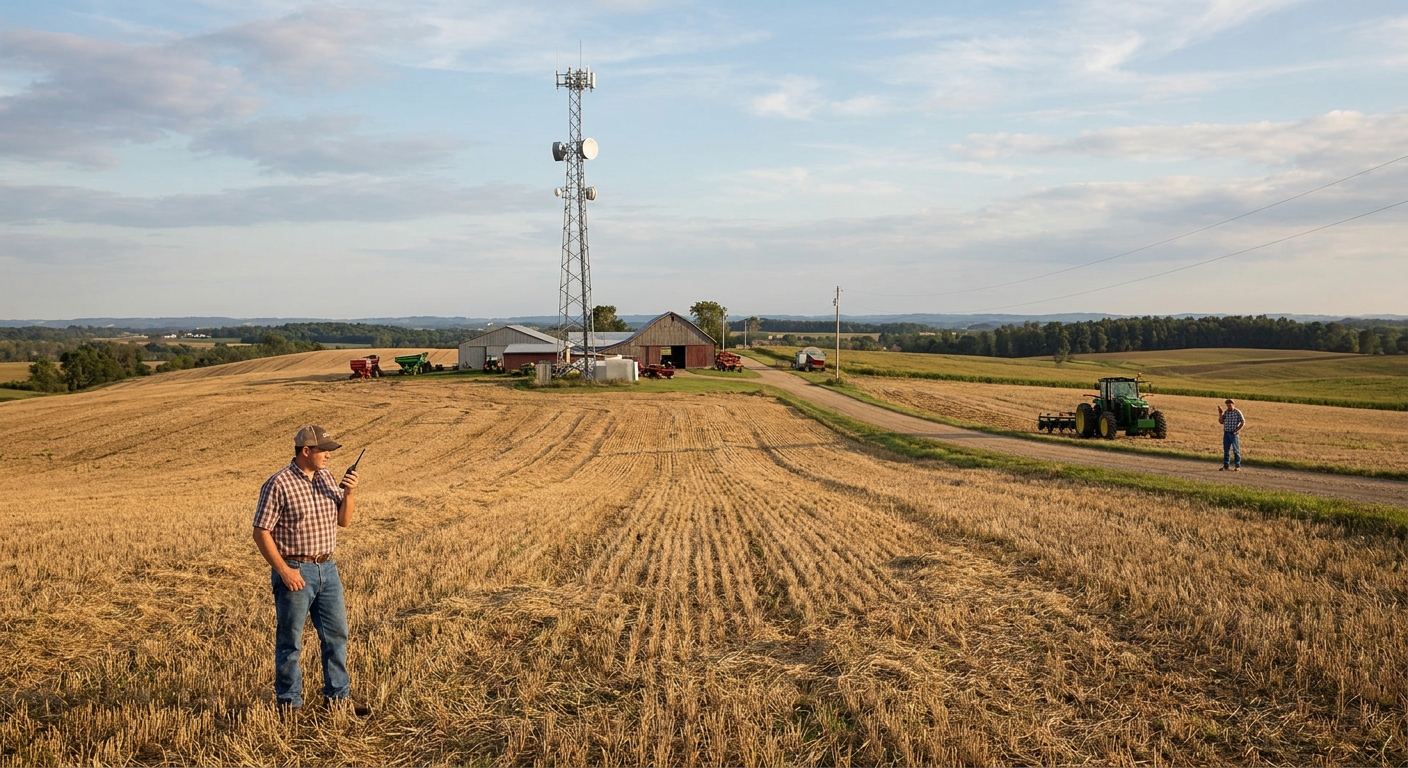
Antenna placement makes or breaks your system. Ground-level antennas are convenient, but they're also the worst performers. Get your antennas up high — on silos, barns, hilltops, anywhere that gives you line of sight. Even a few extra feet of elevation translates to miles of coverage. And if you're using repeaters, placement is everything. Put one in a valley and you've wasted your investment. Put it on a ridge and you've just solved half your dead zone issues.
Testing Before You Commit
Don't assume your system works until you've proven it. Walk every corner of every field with a radio in hand. Key the mic from the farthest points. Try the low spots, the wooded areas, the places where you know signal struggles. Document where coverage drops and where it holds strong.
Testing tells you where you need repeaters, where handheld units are enough, and where you might need to rethink your entire approach. It's the difference between a system that looks good on paper and one that actually keeps your team connected when it counts.
What Breaks Down Without Good Records
Radio systems aren't set-it-and-forget-it. Frequencies drift. Antennas corrode. Repeaters go offline. If you don't have documentation showing what you installed, where you installed it, and how it's configured, you're troubleshooting blind when something goes wrong.
Keep records of everything:
- Radio models and serial numbers
- Frequency assignments and license details
- Antenna locations and heights
- Repeater settings and coverage maps
- Maintenance schedules and service logs
Common Mistakes That Cost Coverage
Most farms that struggle with radio coverage make the same handful of errors. They assume more power solves everything. It doesn't. They ignore terrain. That's a mistake. They skip repeaters because they seem complicated. Then they wonder why half their property has no signal.
Another common slip-up is mixing incompatible equipment. Not all radios play nice together, even if they're on the same frequency. Digital and analog systems don't always cross-communicate cleanly. If you're building out a multi-farm network, standardize your equipment. It saves headaches and ensures everyone can actually talk to each other. When comparing options for reliable communication equipment, many operators research Kenwood and Motorola radios to find the best match for their operational needs.
Battery management gets overlooked too. Radios are useless when they're dead. Build charging stations into your routine. Keep spares on hand. And if you're running long shifts or covering large areas, invest in extended batteries or vehicle chargers that keep units topped off throughout the day.
Multi-Farm Coverage Is Possible
Can one two-way radio system cover multiple farms and fields? Absolutely. But it's not automatic, and it's not cheap. You'll need the right frequency, enough power, smart antenna placement, and probably at least one repeater if your properties are spread out or hilly. Understanding the importance of communication systems for safety helps organizations recognize how reliable connectivity prevents accidents and improves coordination. Many operations looking to upgrade their infrastructure explore Kenwood radios and Motorola Solutions equipment for professional-grade performance. You'll need to test your coverage, document your setup, and maintain your equipment like it matters — because it does.
Radio communication isn't glamorous, but it's one of the most reliable tools you can deploy across an agricultural operation. When your system is designed correctly, you get instant contact across miles of ground, through weather that would kill a cell signal, and without relying on towers that don't exist in rural areas. That's not just convenience. That's operational resilience. And for farms running lean with tight margins, that kind of reliability isn't optional — it's what keeps everything moving when it needs to most.
Ready to Strengthen Your Farm's Communication?
We know how critical it is to keep every part of your operation connected, no matter how many fields or farms you manage. Let’s work together to design a radio system that fits your land and your workflow—so you never miss a call when it matters most. Reach out to us at 800-523-1579 or contact us today and let’s make sure your team stays in sync, season after season.
‹ Back
Recent Posts
-
Can One Two-Way Radio System Cover Multiple Farms & Fields?
September 15, 2026
-
Do Farms Need an FCC License for Two-Way Radios?
September 1, 2026
-
When Should Mine Page Phones Be Serviced or Replaced?
August 18, 2026
-
Is Your Two Way Mining Radio Losing Battery Life Fast?
August 4, 2026
-