


Best Two-Way Radio Systems for Rock Quarries & Aggregate Operations
Most quarry operators think radios are just walkie-talkies with bigger batteries. Point and talk. But the difference between a system that holds up under real-world abuse and one that dies in six months isn't just specs on a datasheet—it's safety, uptime, and whether your crew can actually hear each other when it counts. Rock dust, vibration, noise levels that make conversation impossible without tech—these aren't edge cases. They're the baseline.
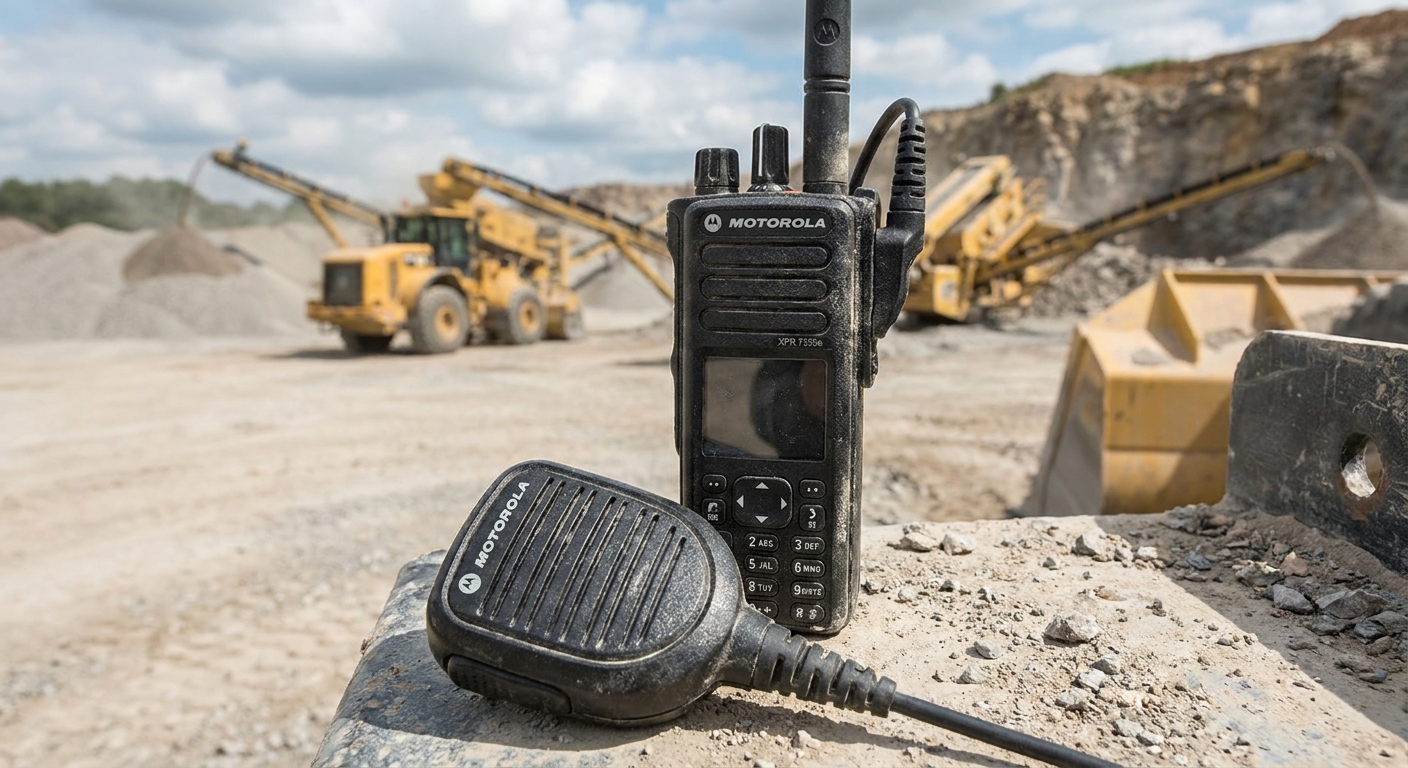
So here's what matters. If you're running aggregate operations across sprawling acreage with loaders, crushers, and haulers moving nonstop, your communication backbone can't be an afterthought. Every radio needs to survive drops, weather, and interference. Every transmission should cut through engine roar. And every system decision should be grounded in what actually happens on-site—not what looked good in a catalog.
Why Quarries Can't Run on Cell Phones
Cell coverage falls apart the moment you're working around heavy rock piles, metal structures, or in remote pits. Even when bars show up, delays kill coordination. Two-way radios deliver instant push-to-talk with zero lag, which means drivers don't wait for connections when a loader's swinging into their path. Radios also don't care about app updates or data plans—they just work.
And fragility isn't an option. Phones crack. Radios built for industrial use take the hit and keep transmitting. That's the gap most operations can't afford to ignore.
The Features That Separate Real Systems from Toys
We've seen too many sites buy cheap radios only to replace them every season. The right system starts with durability ratings that mean something—IP54 at minimum, IP67 or IP68 if you're serious about water and dust intrusion. Military-grade drop tests aren't marketing fluff; they're the difference between a radio that survives a tumble off a truck bed and one that shatters.
Range matters more than most buyers realize. A quarry isn't a warehouse. You need coverage across acres, through obstacles, and into areas where line-of-sight disappears. Battery life should match shift length without scrambling for chargers mid-day. Noise cancellation and audio clarity aren't luxuries when your environment runs at 90+ decibels—they're survival tools.
- Rugged construction rated for dust, moisture, and impact
- Range that covers entire site footprints without dead zones
- Battery performance lasting 12-16 hours minimum
- Noise-canceling audio so crews can hear over machinery
- Hands-free accessories for operators running equipment
- Emergency alert features including man-down detection
- Talk group capability to separate departments or teams
Motorola MOTOTRBO Handles the Heavy Lifting
The XPR 7550e and XPR 3500e models from Motorola's MOTOTRBO line show up on quarry sites for good reason. IP68 waterproofing means submersion doesn't kill them. Integrated Bluetooth lets supervisors stay connected without pulling the radio off their belt. The audio processing cuts through ambient noise so transmissions stay clear even when a crusher's running at full tilt.
These radios support both analog and digital modes, which matters if you're upgrading an older fleet without replacing everything at once. GPS tracking, emergency buttons, and long battery life make them a safety net as much as a communication tool. They're built for the kind of punishment aggregate operations dish out daily.
Kenwood NX-3000 Series Brings Flexibility
Kenwood's NX-3000 radios support NXDN and DMR digital protocols plus analog, so you're not locked into one ecosystem. That flexibility helps when integrating with existing systems or planning future upgrades. Construction is rugged enough to handle drops and dust, and the audio stays intelligible in high-noise zones.
Battery longevity matches long shifts, and optional heavy-duty speaker mics or headsets make operation safer when hands need to stay on controls. For sites that need adaptability without sacrificing toughness, this series delivers.
- Multi-protocol support for NXDN, DMR, and analog
- Rugged build rated for industrial abuse
- Clear audio even in extreme noise environments
- Long battery life suitable for extended shifts
- Compatible with a wide range of accessories
Hytera PD7i Series Balances Features and Durability
The PD7i series from Hytera offers IP67 protection, meaning it handles dust storms and water exposure without flinching. Audio quality stays sharp, and emergency alarms plus lone worker features add layers of safety for operators working in isolated areas. Digital and analog operation keeps compatibility broad.
For operations mixing newer and older equipment, Hytera provides a bridge without forcing a full system overhaul. The radios take punishment and keep crews connected across sprawling sites.
Icom F3400D Series Delivers Industrial-Grade Reliability
Icom's F3400D radios are waterproof, dustproof, and built for environments where failure isn't an option. Superior audio processing ensures transmissions cut through background roar, and man-down plus lone worker alerts provide automatic safety monitoring. Digital and analog modes offer deployment flexibility.
Customizable options let you tailor the system to specific operational needs, whether that's extra battery capacity, specialized mics, or integration with dispatch software. These radios show up ready to work in conditions that would sideline lesser equipment.
- Waterproof and dustproof construction
- Superior audio clarity in noisy conditions
- Man-down and lone worker safety alerts
- Digital and analog mode support
- Customizable configurations for specific site needs
Vertex Standard EVX-530 Series Offers Budget-Friendly Performance
The EVX-530 series doesn't skimp on durability or features despite a lower price point. Compact design makes them easy to carry, and digital audio stays clear. Emergency alert functions and battery life hold up through full shifts, making them viable for smaller operations or as backup units in larger fleets.
For sites that need reliable communication without overspending, Vertex Standard delivers solid performance without cutting corners on what actually matters in the field.
Why Some Operations Still Run Outdated Systems
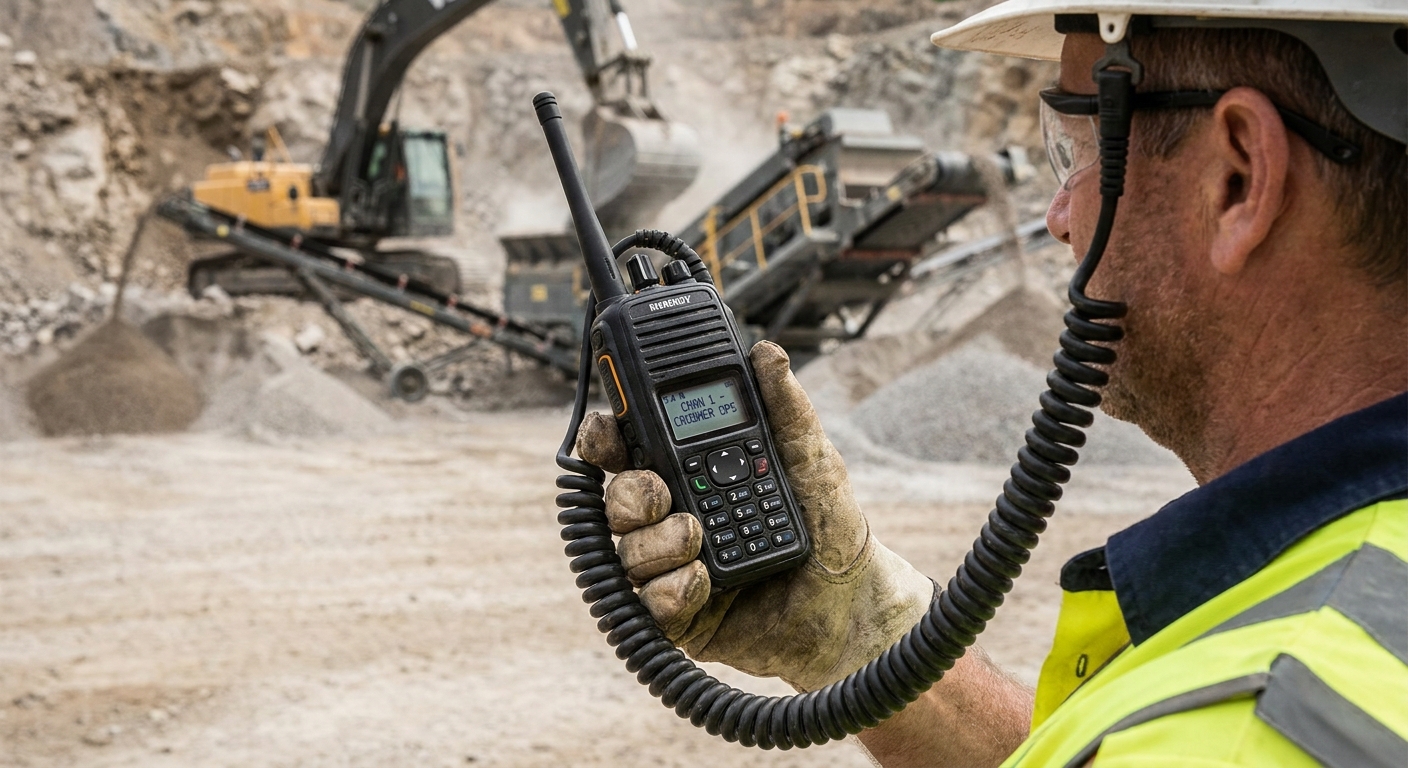
Plenty of quarries stick with aging analog radios because "they still work." But that logic ignores dead zones, garbled transmissions, and safety features that never existed in older models. Digital systems offer better range, clearer audio, and features like GPS tracking or emergency alerts that can prevent accidents—or speed up response when they happen.
Upgrading isn't just about newer tech. It's about fewer miscommunications, better coverage, and tools that actively improve safety instead of just passing messages back and forth.
- Analog systems lack emergency alert capabilities
- Digital radios provide clearer audio in high-noise environments
- GPS tracking helps locate crews quickly in emergencies
- Better range reduces dead zones across large sites
- Modern systems integrate with other safety and dispatch tools
Accessories Make or Break Usability
A great radio paired with a flimsy mic or uncomfortable earpiece wastes potential. Heavy-duty speaker mics designed for industrial use handle vibration and weather. Headsets with noise-canceling microphones let operators communicate hands-free without shouting. Remote speaker mics with oversized push-to-talk buttons work even with gloves on.
The wrong accessories turn a reliable radio into a frustration. Investing in rugged, purpose-built gear ensures the whole system performs under real conditions, not just lab tests.
Communication Systems Built for the Grind
Choosing the right two-way radio system isn't about finding the cheapest option or the one with the most buzzwords. It's about matching capability to the actual demands of quarry and aggregate operations—dust, noise, distance, and the need for instant, clear communication when machinery's moving and people's safety depends on it. The systems listed above have proven themselves in the field, not just on spec sheets. For operations considering repair services to extend the life of existing equipment or looking to upgrade their communication infrastructure, skimping doesn't save money; it creates risk. And in environments where seconds matter, that's a gamble no operation should take.
Let's Keep Your Crew Connected and Safe
We know how critical reliable communication is for every shift in the quarry. If you're ready to upgrade your radio system or need expert advice on the best fit for your operation, let's talk about solutions that work as hard as your team does. Call us at 800-523-1579 or contact us today to get started on building a safer, more efficient site together.
‹ Back
Recent Posts
-
Best Two-Way Radio Systems for Rock Quarries & Aggregate Operations
October 13, 2026
-
Two-Way Radios vs. Cell Phones - Which Is Better for Farm Communication?
September 29, 2026
-
Can One Two-Way Radio System Cover Multiple Farms & Fields?
September 15, 2026
-

Do Farms Need an FCC License for Two-Way Radios?
September 1, 2026
-
When Should Mine Page Phones Be Serviced or Replaced?
August 18, 2026