


Two-Way Radios vs. Cell Phones - Which Is Better for Farm Communication?
Most farm operators think communication is just about having a device in hand. Something to yell into when a tractor breaks down or a gate needs opening. But the reality is more nuanced—and if you're not thinking through coverage, durability, and response time, you're setting yourself up for delays, miscommunication, and blown workdays. Radios and cell phones both have their place, but they're not interchangeable. Each one leaves a different kind of mark on how your operation runs.
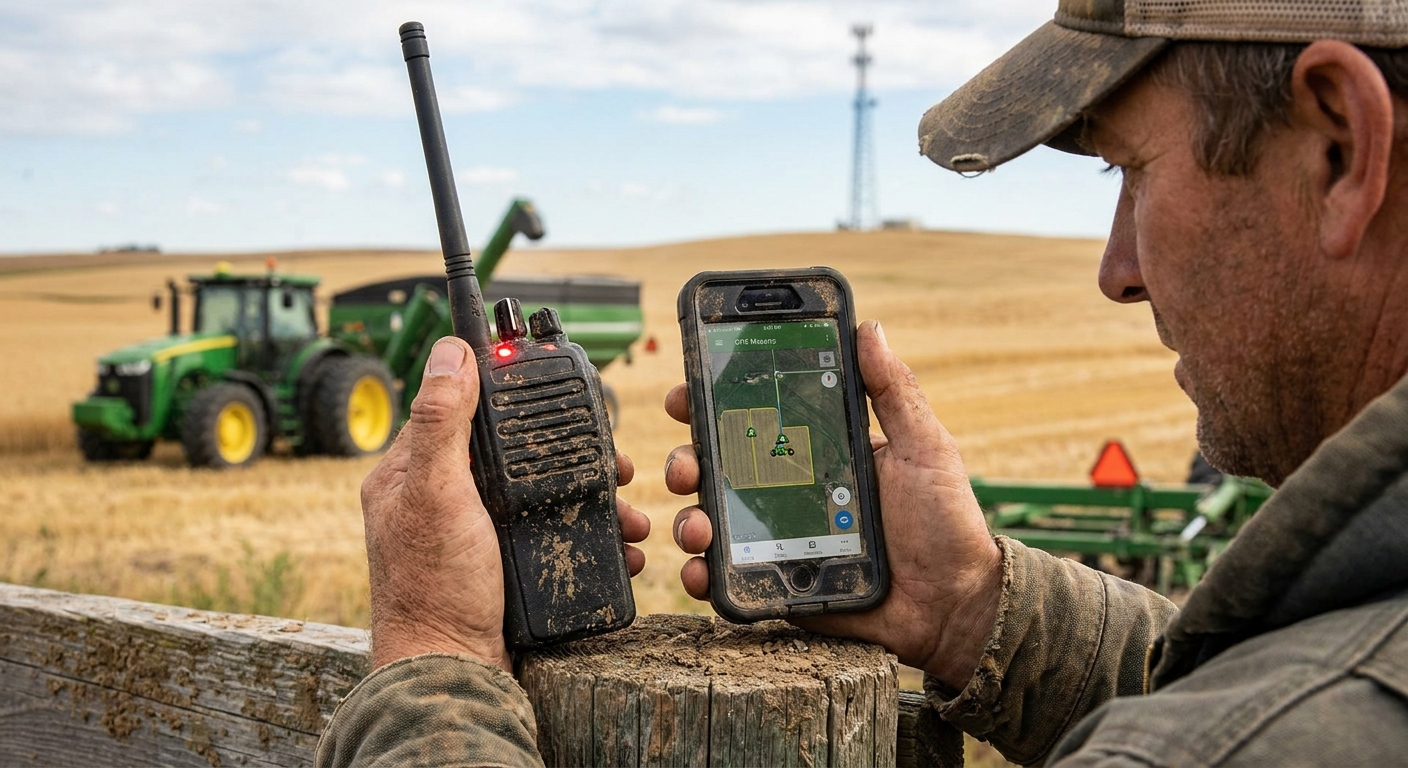
So here's what matters. If you're managing acres that stretch beyond what towers can reach, that changes the game. Just don't assume the device you carry for personal use is the one that'll hold up when you're knee-deep in mud at 6 a.m. Every tool should match the environment. Every choice should be grounded in what actually happens out there—not just what looks good in a catalog.
When Signal Strength Decides Everything
Rural farms sit in dead zones more often than not. Cell towers don't follow property lines, and carriers don't prioritize coverage where population density drops. You might get full bars near the house, then watch them vanish once you cross into the back forty. That's not a quirk—it's the norm. And when a call drops mid-sentence or a text hangs for five minutes, you lose more than convenience. You lose coordination.
Two-way radios bypass the tower entirely. They run on frequencies that punch through terrain, buildings, and weather without asking permission from a network. Range depends on the model and whether you've got a repeater, but even basic units cover miles. If your crew is scattered across fields, barns, and equipment sheds, radios give you a direct line that doesn't flicker out when you need it most.
The Speed of Push-to-Talk
There's no dialing with a radio. No unlocking, no scrolling through contacts, no waiting for the ring. You press the button, you talk, and everyone listening hears it instantly. That's the difference between coordinating a repair in thirty seconds and losing ten minutes to back-and-forth calls that don't connect.
Cell phones require more steps, even for a quick check-in. You pull it out, unlock it, find the name, hit call, and hope the signal holds. Group texts help, but they still lag. By the time everyone reads and responds, the moment's passed. For fast-moving operations—harvest, livestock moves, emergency shutdowns—radios win on pure immediacy.
Built for the Beating Farms Deliver
Farm equipment doesn't pamper gadgets. Dust, water, vibration, and the occasional drop onto concrete are standard operating conditions. Two-way radios are engineered for exactly that. Most commercial models are sealed against moisture and debris, shock-resistant, and rated for outdoor abuse. Their batteries are designed to last full shifts without babying.
Smartphones, even the rugged ones, are still consumer tech at heart. Screens crack, ports clog, and water damage is a constant risk. Battery life drains faster when the phone hunts for signal or runs apps in the background. Unless you're buying specialized ruggedized units—which come with their own price tag—you're gambling on how long that phone survives the field.
What You Pay Upfront and What You Keep Paying
Radios cost less to buy and nothing to operate monthly. You purchase the units, maybe a repeater if you need extended range, and that's it. No carrier fees, no data plans, no surprise overages. Maintenance is minimal. When a radio dies, you replace it. When it works, it just works.
Cell phones come with recurring bills. Every line needs a plan, and those add up fast when you're equipping a full crew. Then there's the cost of repairs, screen replacements, and upgrades when devices age out. For large operations, the math tilts quickly. The ongoing expense becomes a line item that doesn't quit.
Where Radios Stay Focused and Phones Branch Out
Phones do more than talk. They map fields, track weather, pull up market data, run apps for inventory and equipment logs. If your operation leans on digital tools for planning and record-keeping, smartphones integrate those functions into one device. GPS alone can justify carrying one, especially when you're navigating unfamiliar ground or coordinating deliveries.
Radios stick to their lane. They're built for voice, not browsing. Some higher-end models add GPS tracking, emergency alerts, or hands-free modes, but the core function stays the same. If you need communication and nothing else, that simplicity is an advantage. No distractions, no battery drain from apps you're not using.
The Scenarios That Tip the Scale
Coverage and distance matter most when you're working outside cell tower range. If your farm sits in a valley, behind hills, or miles from the nearest town, radios are the only reliable option. They don't care about infrastructure. They just broadcast.
Phones make more sense when coverage is solid and your team needs access to digital tools. If you're already using farm management software, messaging apps, or cloud-based systems, phones tie everything together. But even then, weak spots in signal can stall productivity when you need it most.
Durability Under Real Conditions
Radios survive what phones don't. Mud, rain, dust storms, dropped tools—radios are designed to take hits and keep transmitting. Batteries last longer because they're not juggling background processes or fighting for signal. When you're working from dawn to dusk, that endurance matters.
Phones are fragile by comparison. Cases help, but they don't eliminate risk. Water ingress, cracked screens, and dead batteries are common complaints. If your crew is rough on gear—and most farm crews are—radios hold up better over time.
The Tools Most Farms Actually Need
Here's what works in the field:
- Two-way radios for instant communication across acreage without relying on cell towers
- Cell phones for accessing apps, GPS, weather data, and keeping records on the move
- Repeaters to extend radio range across larger properties or difficult terrain
- Rugged phone cases if you're determined to use smartphones in harsh conditions
- Backup batteries or charging solutions for both devices to avoid downtime mid-shift
When Phones Become a Liability
Dead zones aren't the only problem. Phones distract. Notifications, apps, personal calls—they pull attention away from the job. Radios don't offer that temptation. They're single-purpose tools that keep crews focused on the task at hand.
Cost creep also becomes an issue. Monthly bills, data overages, insurance plans—it all adds up. For small operations or tight budgets, that recurring expense can strain resources better spent elsewhere.
The Combination Most Operations Run
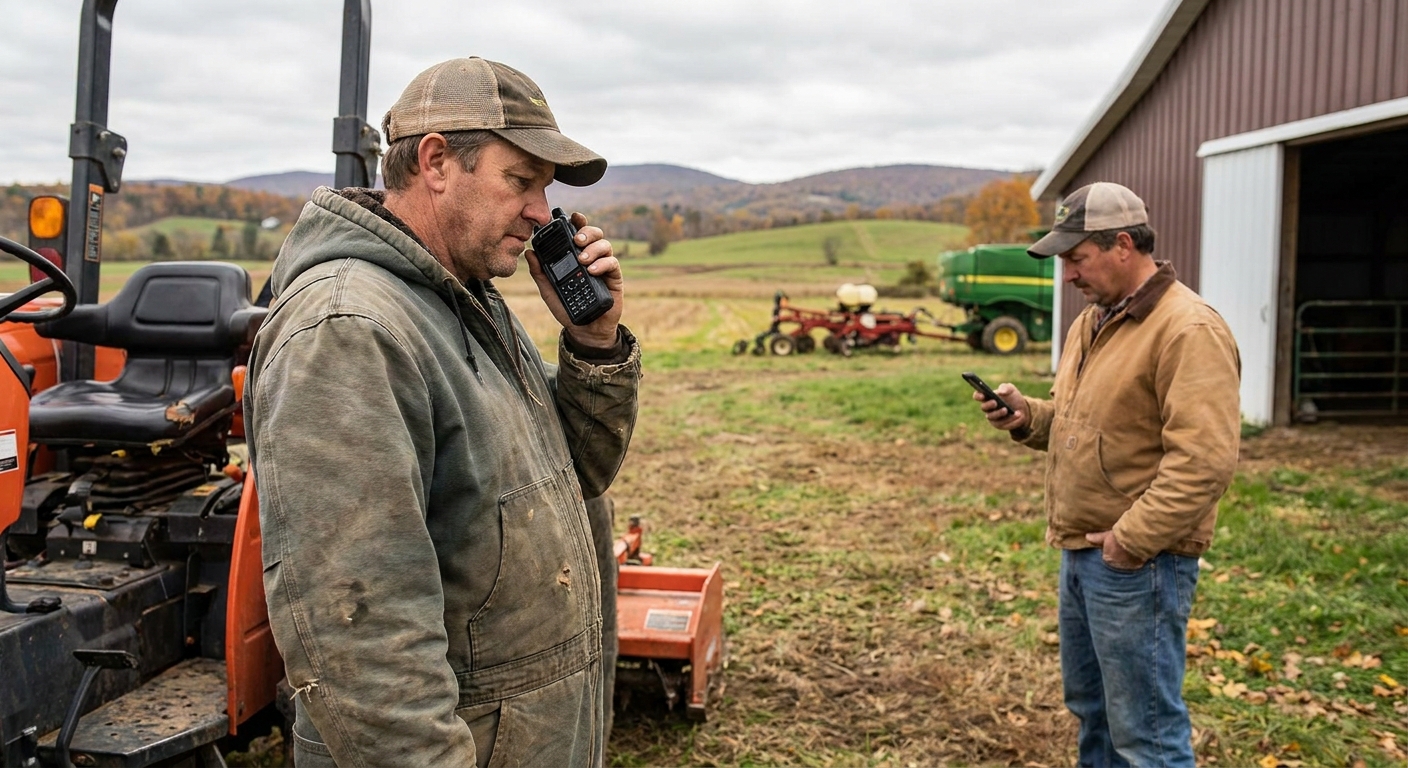
Many farms don't pick one over the other. They run both. Radios handle day-to-day coordination—quick check-ins, equipment moves, safety calls. Phones cover the rest—scheduling, vendors, market updates, emergency contact outside the property.
That split makes sense when you think about what each tool does best. Radios keep the crew connected in real time without depending on infrastructure. Phones provide access to the digital side of the business when you've got signal and time to use it.
Where Communication Breaks Down
Assuming one device fits every scenario is where most operations stumble. Phones fail in dead zones. Radios can't pull up a map or send a photo. If you're not matching the tool to the task, you're working harder than you need to.
- Relying on phones in areas with no coverage wastes time and frustrates crews
- Ignoring radios because they feel outdated leaves you without a backup when signal drops
- Skipping repeaters on large properties limits radio effectiveness unnecessarily
- Choosing consumer-grade phones over rugged models leads to frequent replacements
- Not training crews on proper radio etiquette creates confusion and missed messages
Battery Life Tells the Real Story
Radios run all day without complaint. Their batteries are built for long shifts, and power management is straightforward. You charge them overnight, they work the next day. No surprises.
Phones drain faster, especially in weak signal areas where they're constantly searching for towers. Heavy app use, GPS tracking, and screen time all pull power. By mid-afternoon, you're hunting for a charger or carrying a battery pack. That's fine for office work. It's a problem in the field.
What the IRS and Accountants Won't Tell You
Business communication expenses are deductible, but the structure matters. Monthly cell phone bills qualify if the line is used for business. Radio purchases fall under equipment costs. If you're financing either, the interest may be deductible depending on how you structured the loan.
Keep records of what you buy and why. If an auditor questions whether those devices were business-related, having documentation backs you up. Mixing personal and business use muddies the water. Separate lines or dedicated devices keep things clean.
Common Mistakes That Cost Time
- Assuming cell phones work everywhere because they work at home
- Buying cheap radios that don't cover the range you actually need
- Skipping rugged cases or waterproofing on phones used in wet or dusty conditions
- Not assigning radio channels properly, leading to cross-talk and missed calls
- Letting batteries die mid-shift because no one charged them the night before
When to Bring in Outside Help
If your operation is large enough that communication breakdowns cost serious money, it's time to consult a professional. Radio system installers can design coverage maps, recommend repeaters, and optimize frequencies. IT consultants can help integrate phones with farm management software.
Don't guess on infrastructure. A bad setup wastes money and frustrates your crew. Whether it's radios or phones, getting it right the first time pays off in reliability and efficiency.
The Bottom Line on Farm Communication
Choosing between radios and phones isn't about picking the fancier option. It's about matching the tool to the terrain, the crew, and the work. Radios deliver when infrastructure doesn't. Phones add layers of functionality when coverage allows. Most farms need both, used where each makes sense.
There's no shortcut to reliable communication. You either invest in the right tools upfront, or you spend more time fixing problems caused by the wrong ones. Know your coverage. Know your crew's needs. And don't treat communication like an afterthought—because when it fails, everything else slows down.
Let’s Build a Communication System That Works for You
We know every farm faces its own set of challenges, and the right communication tools can make all the difference in keeping your operation running smoothly. If you’re ready to upgrade your setup or need expert advice on radios, repeaters, or integrating phones, let’s talk it through together. Call us at 800-523-1579 or contact us today and let’s make sure your crew stays connected when it matters most.
‹ Back
Recent Posts
-
Two-Way Radios vs. Cell Phones - Which Is Better for Farm Communication?
September 29, 2026
-
Can One Two-Way Radio System Cover Multiple Farms & Fields?
September 15, 2026
-
Do Farms Need an FCC License for Two-Way Radios?
September 1, 2026
-
When Should Mine Page Phones Be Serviced or Replaced?
August 18, 2026
-
Is Your Two Way Mining Radio Losing Battery Life Fast?
August 4, 2026