


How to Improve Two-Way Radio Coverage Across a Large Quarry
Most quarry managers think radios are simple. Pick a frequency, hand out units, and call it done. But if you've ever watched a foreman yell into a handset while standing next to a haul truck, you know better. Quarries eat signals alive. The terrain shifts. Equipment moves. And dead zones don't announce themselves until someone needs help and can't reach anyone.
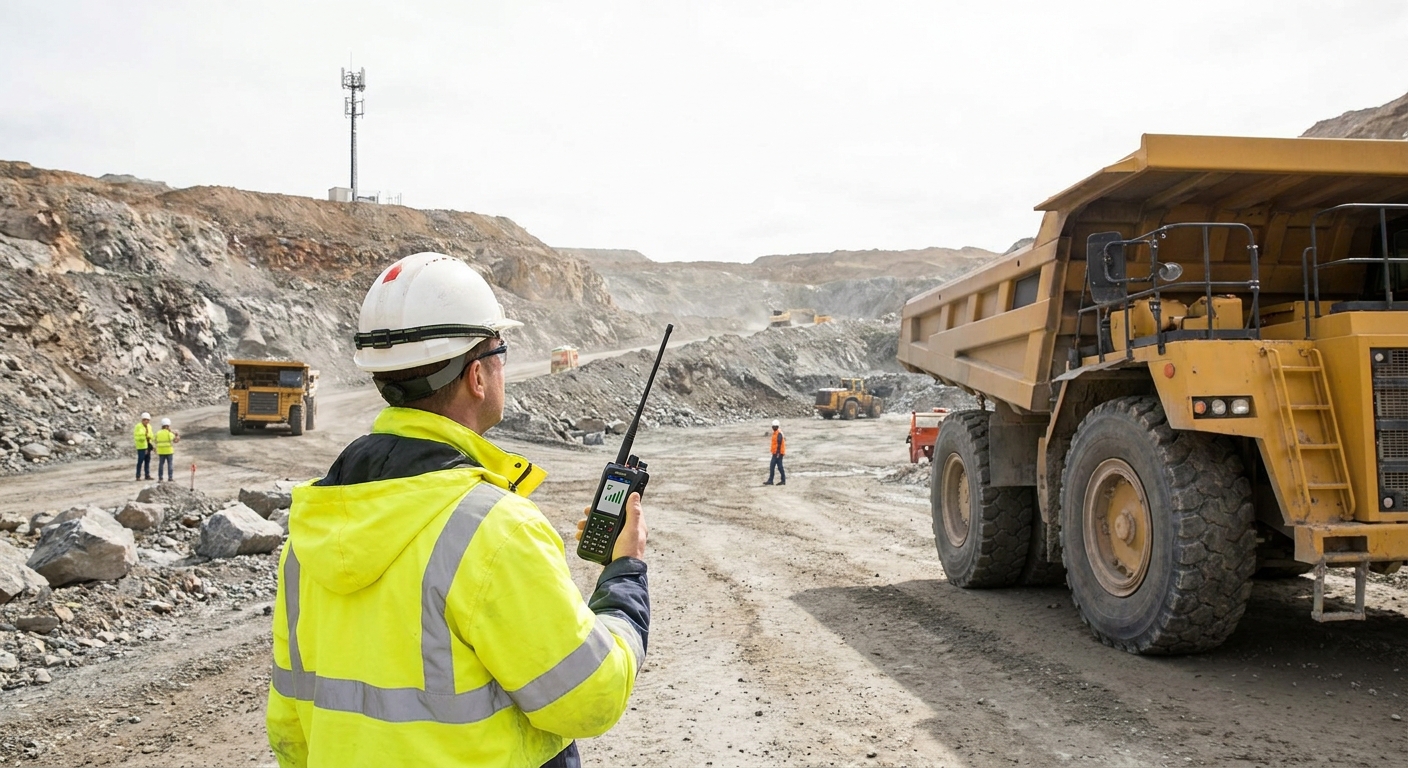
So here's the truth. If you're running heavy machinery across acres of rock and dust, communication isn't optional. Every blind spot is a safety risk. Every dropped call is downtime. And every fix should start with understanding what's killing your coverage — not just throwing more radios at the problem.
The Terrain Works Against You
Quarries aren't flat. They're carved into hillsides, dug into pits, and stacked with berms that block line of sight. Radio waves don't bend around corners or climb walls on their own. When your operator is fifty feet below grade and your supervisor is on the rim, that signal has to fight through rock, dust, and distance.
Add in the steel from loaders, crushers, and conveyors, and you've got reflective surfaces bouncing signals in every direction. The result? Weak transmission, garbled audio, and crews who stop trusting their radios altogether. Understanding the layout is step one. Ignoring it is how you end up with expensive equipment that doesn't work.
Map the Gaps Before You Spend a Dollar
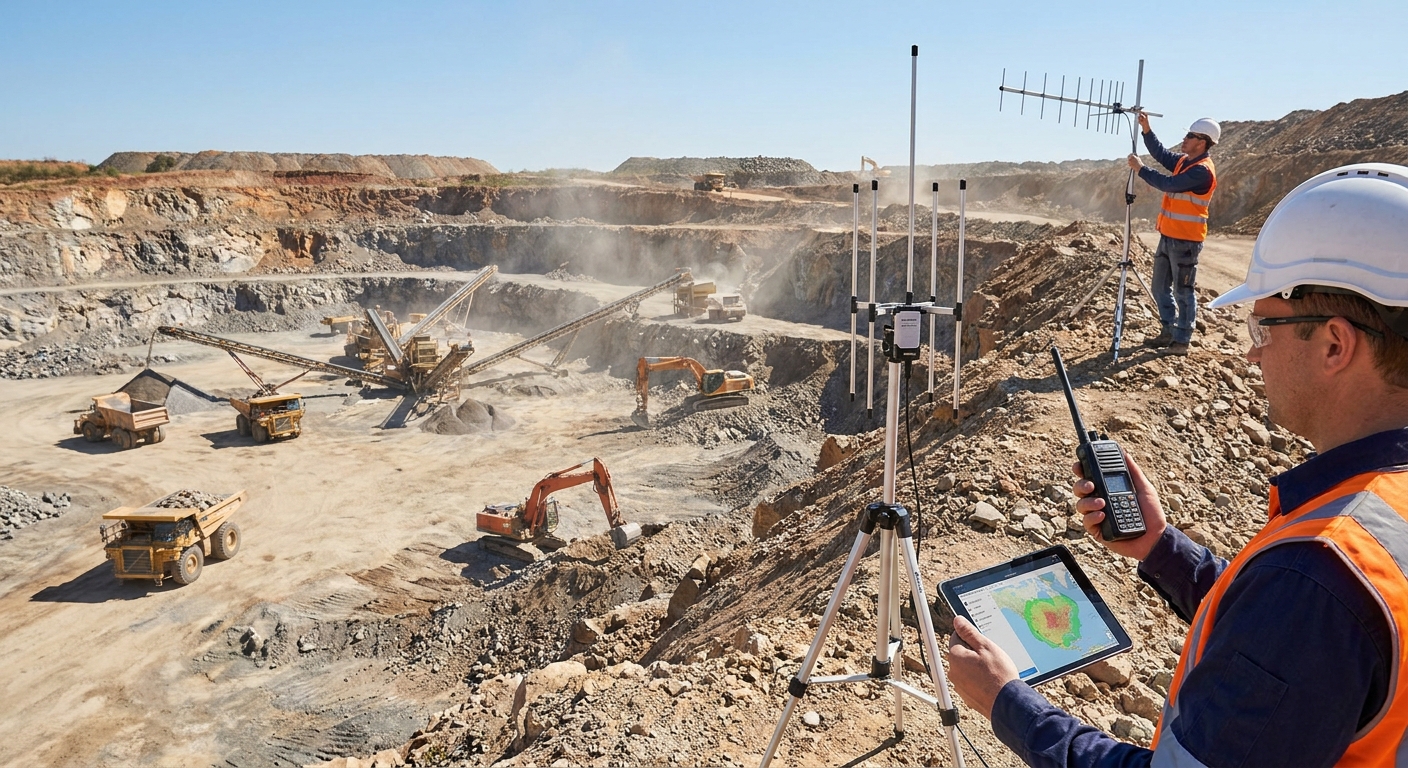
You can't fix what you haven't measured. Walk the site with your current radios and test every zone where people actually work. Mark the spots where signals drop, where static takes over, and where handhelds go silent. Pay attention to high-traffic routes, remote corners, and anywhere elevation changes sharply.
This isn't busywork. It's data. And it tells you exactly where to focus your upgrades — whether that's adding repeaters, repositioning antennas, or swapping out underpowered units. Skip the survey and you're guessing. Guess wrong and you'll be back here in six months wondering why nothing improved.
The Right Radio Matters More Than You Think
Cheap handhelds from a big-box store won't cut it. Quarries demand industrial-grade equipment built to handle dust, moisture, impacts, and electrical noise. Look for units with high power output, rugged casings, and advanced noise cancellation that filters out engine roar and crusher hum.
UHF radios generally outperform VHF in quarry environments. Their signals navigate around obstacles and penetrate structures better. Digital models push that advantage further with clearer audio, longer range, and encryption when you need it. If your crew is still using analog units from a decade ago, it's time to upgrade to Kenwood radios or similar industrial-grade systems.
Repeaters Multiply Your Range
A repeater receives your transmission and rebroadcasts it at higher power, effectively doubling your coverage. Install one on high ground or a central tower, and suddenly your radios reach zones that were dead before. For sprawling quarries or sites with complex layouts, a network of linked repeaters can blanket the entire operation.
Placement is everything. Mount too low and you gain nothing. Put it where it can see the whole site and you've just solved half your problems. Work with someone who knows propagation patterns and can calculate optimal locations based on your terrain, not just guesswork.
Antennas Deserve More Attention
The stock antenna on your radio is rarely optimized for quarry use. External antennas mounted on buildings, towers, or vehicles can boost signal strength and eliminate dead zones. Directional antennas focus coverage toward specific areas — perfect for long haul roads or remote benches. Omnidirectional antennas provide 360-degree coverage from a central point.
Height wins. The higher your antenna, the farther your signal travels and the fewer obstructions it hits. Clear away anything blocking the line of sight and watch your coverage improve without spending another cent on hardware.
When Standard Solutions Don't Reach
Some quarries have underground sections, deep pits, or layouts so broken up that even repeaters struggle. That's when Distributed Antenna Systems come into play. DAS uses a network of antennas linked by cable to spread signal evenly across the toughest zones. It's more complex and costs more upfront, but it delivers coverage where nothing else will.
If your site has areas that radios simply can't penetrate — and those areas matter for safety or operations — DAS is worth the investment. It's overkill for simple sites. For complicated ones, it's the only real answer.
Maintenance Isn't Glamorous But It Pays
Once your system is running, don't walk away. Dust clogs ports. Cables corrode. Antennas get knocked out of alignment by wind or equipment. Batteries wear out. And every one of those small failures chips away at your coverage until you're back where you started.
Schedule regular inspections of radios, repeaters, antennas, and all the infrastructure holding them together. Test coverage quarterly to catch new dead zones caused by shifts in terrain or equipment placement. Replace worn parts before they fail. Understanding how repair services extend equipment life helps you stay ahead of breakdowns. It's boring. It works.
- Check radio batteries monthly and replace any that won't hold a charge
- Inspect antenna connections for corrosion or loosening
- Clean dust and debris from radio housings and charging docks
- Test repeaters to confirm they're transmitting at full power
- Review coverage maps after major site changes or new excavation
Your Crew Needs to Know How to Use What You Built
The best radio system in the world doesn't help if your team doesn't use it correctly. Train everyone on proper channel usage, radio etiquette, and emergency protocols. Teach them how to report communication issues so problems get fixed fast instead of ignored.
Make it clear that radios aren't optional. If someone's out of range, they need to move or find another way to check in. If equipment isn't working, it gets reported immediately. Culture matters as much as coverage.
- Use clear, concise language and avoid slang or codes that confuse new workers
- Assign specific channels for different teams or functions to reduce congestion
- Establish check-in protocols for lone workers or remote areas
- Practice emergency procedures so everyone knows how to respond under pressure
When to Bring in Outside Help
If you're hitting walls or don't know where to start, call in professionals who specialize in quarry communications. They'll conduct proper site surveys, recommend equipment tailored to your operation, and handle installation so it's done right the first time. They also stay current on regulatory requirements and can ensure your system meets industry standards.
It's not admitting defeat. It's recognizing that radio propagation is a science, not a guessing game. And when safety's on the line, there's no prize for doing it yourself badly. Working with providers who offer mining communication products ensures you get systems built for industrial environments.
- Look for providers with quarry or mining experience, not just retail radio sales
- Ask for references and site visits to similar operations they've upgraded
- Confirm they offer ongoing support and maintenance contracts
- Verify their technicians are certified and familiar with industrial equipment
Coverage Is Only Half the Battle
Even with perfect signal strength, audio quality matters. Wind, engine noise, and crusher roar can drown out transmissions. Noise-cancelling microphones and external speaker mics help cut through the chaos. Bone conduction headsets work for operators who can't hold a radio while running equipment.
Test different accessories in real conditions. What works in a quiet office won't necessarily work next to a rock crusher. Find what lets your crew communicate clearly without shouting or repeating themselves three times per call.
- Remote speaker mics clip to hardhats or vests for hands-free operation
- Bone conduction headsets transmit sound through the skull, cutting ambient noise
- Heavy-duty earpieces protect hearing while delivering clear audio
- Push-to-talk buttons can be mounted on steering wheels or control panels
Track What's Actually Happening
Once upgrades are in place, don't assume they're working. Monitor call quality, track dead zone reports, and measure response times when issues arise. If certain areas still have problems, dig deeper. Maybe a repeater needs adjustment. Maybe terrain changed. Maybe new equipment is causing interference.
Data tells you where to focus next. Guesses cost time and money. Keep records of what you changed, when you changed it, and what improved — or didn't. That history becomes your roadmap for future decisions.
- Log all coverage complaints with location and time details
- Track repeater uptime and signal strength over time
- Record equipment failures and response times for repairs
- Review coverage reports after major site expansions or reconfigurations
- Benchmark call clarity and range against baseline measurements from your initial survey
Communication Keeps the Quarry Running
Improving radio coverage isn't about checking a box. It's about making sure every operator, foreman, and safety coordinator can reach each other when it matters. That means understanding your terrain, investing in electronic safety equipment for mining, and maintaining what you build. Implementing two-way communication systems designed for challenging environments ensures reliable connectivity across your operation. It also means training your crew and staying ahead of problems instead of reacting to failures.
Get it right and operations run smoother. Safety improves. Downtime drops. Get it wrong and you're gambling with lives and productivity every shift. Coverage isn't a luxury. It's the foundation everything else runs on.
Let’s Build Reliable Communication Together
We know how critical dependable radio coverage is for your quarry’s safety and productivity. If you’re ready to eliminate dead zones and keep your team connected, let’s talk about solutions tailored to your site. Call us at 800-523-1579 or contact us today to get started on a system that works as hard as you do.
‹ Back
Recent Posts
-
How to Improve Two-Way Radio Coverage Across a Large Quarry
November 9, 2026
-
Why Two-Way Radios Lose Coverage Around Quarry Highwalls & Pits
October 27, 2026
-
Best Two-Way Radio Systems for Rock Quarries & Aggregate Operations
October 13, 2026
-
Two-Way Radios vs. Cell Phones - Which Is Better for Farm Communication?
September 29, 2026
-
Can One Two-Way Radio System Cover Multiple Farms & Fields?
September 15, 2026