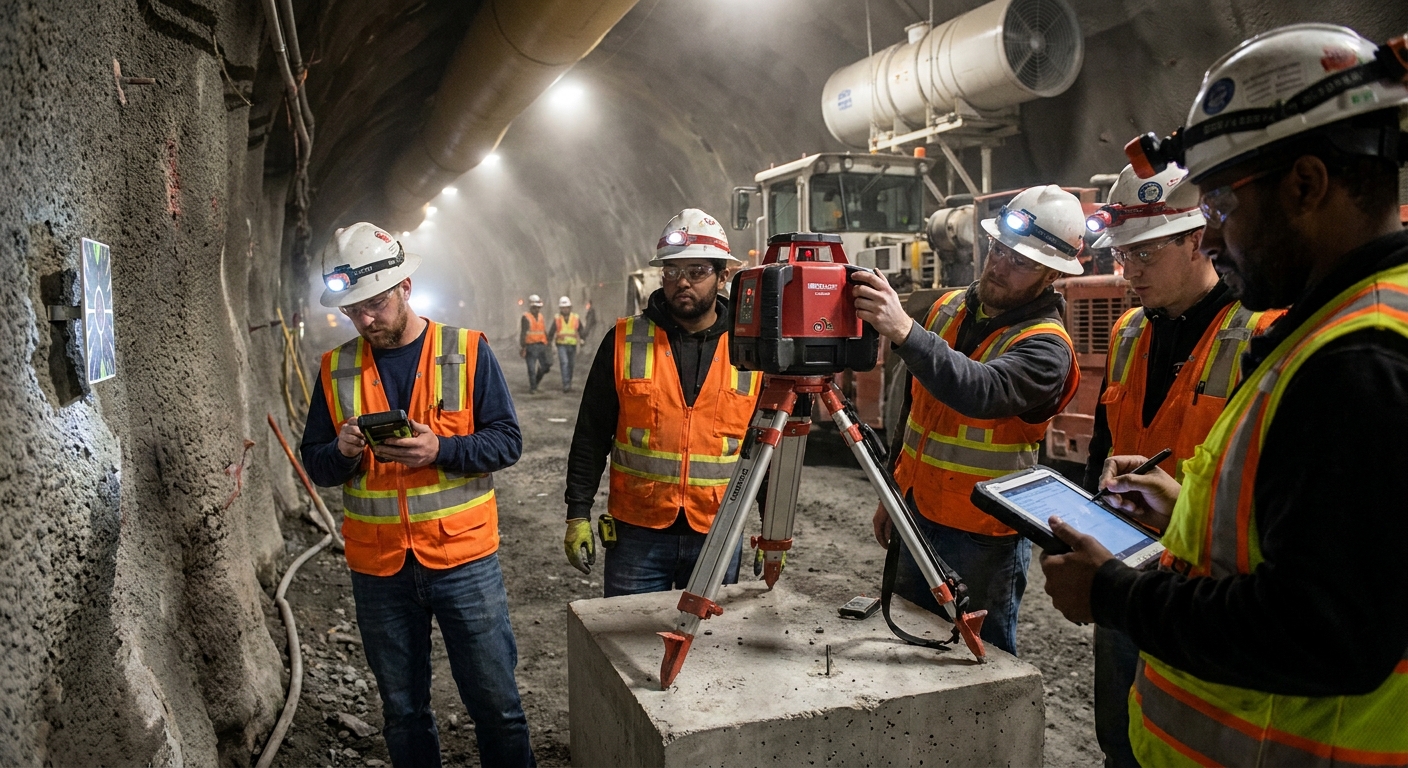


How Laser Alignment Tools Are Used in Mining & Tunneling
Underground operations don't forgive sloppy measurements. A few millimeters off in a tunnel bore can mean millions in rework. A misaligned conveyor can shut down an entire extraction line. And when you're working hundreds of feet below the surface, there's no room for guesswork. Laser alignment tools have changed the game — not because they're flashy, but because they deliver precision where it actually counts.
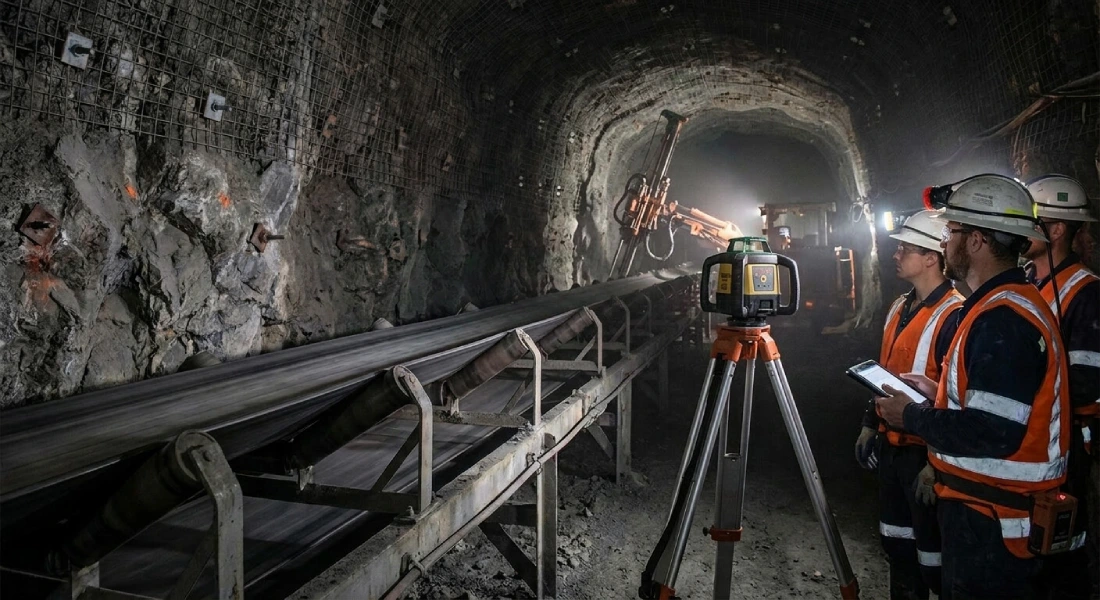
Traditional methods relied on string lines, plumb bobs, and optical instruments that couldn't handle dust, vibration, or the chaos of active excavation. Lasers cut through all that. They give operators a fixed reference point that doesn't drift, doesn't fade, and doesn't require constant recalibration. That's why they've become standard equipment in serious mining and tunneling operations.
Alignment Isn't Optional Underground
Mining and tunneling demand accuracy at every stage. When extraction equipment runs off-axis, you're not just losing efficiency — you're accelerating wear, creating safety hazards, and burning through maintenance budgets. In tunneling, deviation from the planned path can mean structural instability, costly corrections, or worse — intersecting with existing voids or utilities you didn't account for.
Old-school alignment methods couldn't keep up. String lines sag. Optical instruments fog up or get knocked out of position. And in confined, dusty, high-vibration environments, those tools become liabilities. Laser alignment doesn't have those weaknesses. It holds a reference line through conditions that would render other methods useless.
What These Tools Actually Do
Laser alignment tools project a concentrated beam of light that serves as a visual or measurable reference. They come in different configurations — levels, plummets, distance meters — each designed for specific tasks. What sets them apart is durability. These aren't lab instruments. They're built to survive moisture, dust, impact, and the constant vibration of heavy machinery.
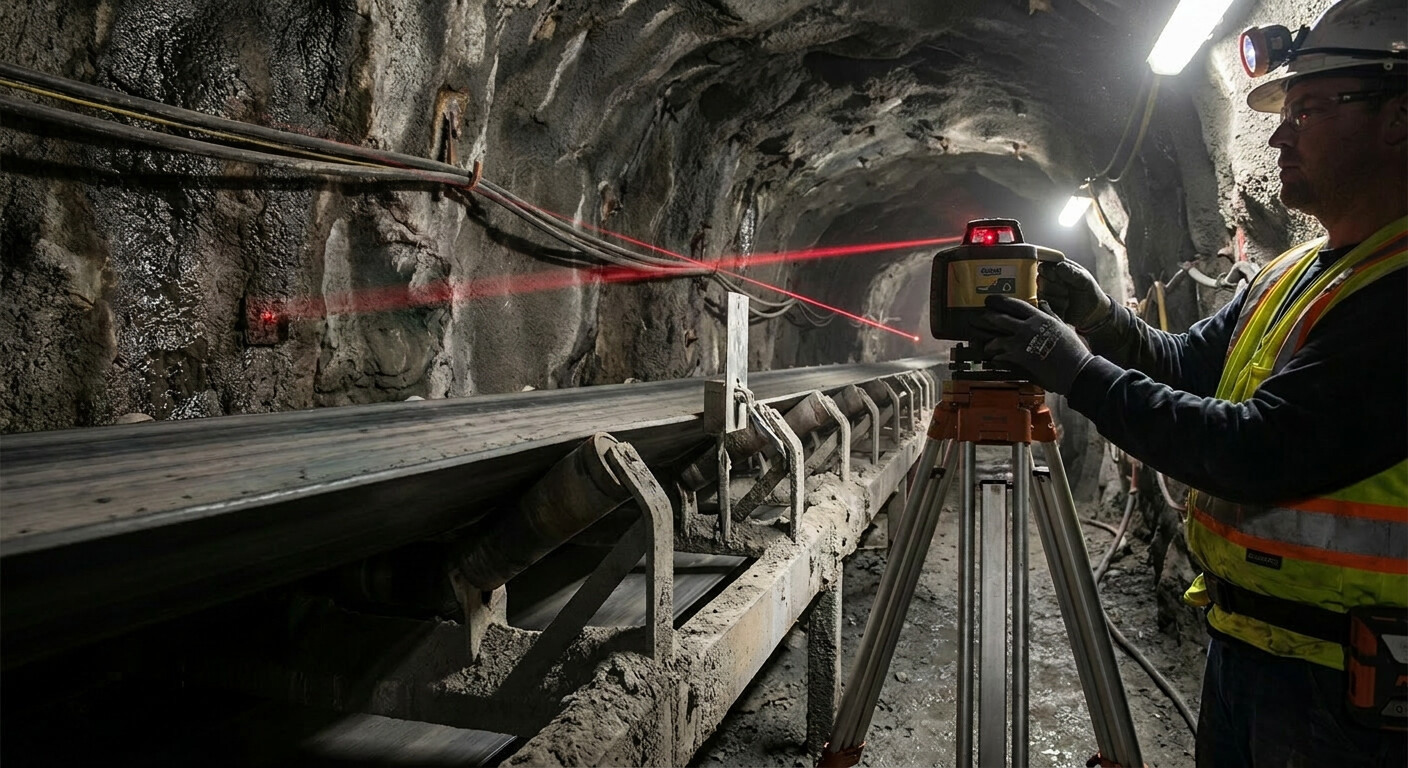
The beam itself is the baseline. Whether you're lining up a conveyor, positioning a drill rig, or guiding a tunnel boring machine, that laser gives you a fixed axis to work from. No interpretation. No estimation. Just a line that stays put.
Conveyor Systems Run on Precision
Conveyor belts move tons of material every hour. When they're misaligned, even slightly, the results compound fast. Material spills off the sides. Rollers wear unevenly. Belts track poorly and tear. Downtime stacks up, and so do repair costs. Laser alignment tools eliminate that drift before it starts.
Operators use lasers to check belt tracking, roller alignment, and frame levelness across the entire system. The process is fast, repeatable, and accurate enough to catch issues before they escalate. That means fewer shutdowns, lower maintenance costs, and safer working conditions for everyone near the line.
Drilling Accuracy Determines Recovery Rates
Drilling isn't just about making holes. It's about making the right holes in the right places at the right angles. Whether you're exploring for new deposits or extracting from known reserves, precision drilling maximizes recovery and minimizes waste. Laser alignment tools help position drill rigs with the kind of accuracy that used to require surveying teams and hours of setup.
The laser provides a reference axis that operators can follow in real time. That reduces the risk of intersecting existing tunnels, hitting utilities, or drilling into unstable zones. It also speeds up the setup process, which matters when every hour of downtime costs money.
Tunnel Boring Machines Follow the Beam
Tunnel boring machines are expensive, complex, and unforgiving. Once they start cutting, corrections are costly. That's why alignment is critical from the first meter. Laser tools project a beam along the planned tunnel axis, giving operators a constant visual reference. The machine follows the beam, and the tunnel stays on course.
This isn't just about staying within tolerance. It's about avoiding rework, maintaining structural integrity, and ensuring that the tunnel meets design specs when it breaks through. Deviations that seem minor early on can compound into major problems by the time you're halfway through a bore.
Setting Out Profiles and Cross-Sections
Before excavation begins, workers need to mark out the tunnel profile — the shape and dimensions of the cross-section to be cut. Laser alignment tools project lines or points onto the tunnel face, giving crews a clear, accurate template to follow. This speeds up the marking process and reduces the risk of over- or under-excavation.
Over-excavation wastes time and material. Under-excavation means going back to cut more, which slows progress and increases costs. Laser-guided profiling keeps both risks in check, ensuring that each section is cut to spec the first time.
Why Lasers Beat the Alternatives
Laser alignment tools deliver benefits that traditional methods can't match. Here's what makes them indispensable:
- Pinpoint accuracy: Lasers provide measurements down to fractions of a millimeter, far beyond what string lines or optical tools can achieve in underground conditions.
- Speed of setup: No need for lengthy calibration or multiple reference points. Set the laser, check the beam, and you're ready to work.
- Durability in harsh environments: Built to handle dust, moisture, vibration, and impact, these tools keep working when others fail.
- Real-time feedback: Operators can see alignment issues immediately and make corrections on the fly, reducing downtime and rework.
- Versatility across applications: From conveyor alignment to tunnel guidance to equipment positioning, one tool handles multiple tasks.
Safety Improvements You Can Measure
Misalignment isn't just an efficiency problem. It's a safety risk. Conveyor belts that track poorly can throw material into walkways. Drills that wander off-axis can hit unexpected voids or utilities. Tunnel boring machines that deviate from the planned path can compromise structural stability. Laser alignment tools reduce all of those risks by keeping equipment and excavation on target.
When alignment is accurate, equipment runs smoother, wear patterns are predictable, and maintenance can be scheduled instead of reactive. That creates a safer work environment and reduces the likelihood of catastrophic failures.
Cost Savings That Add Up Fast
Laser alignment tools aren't cheap, but they pay for themselves quickly. Reduced downtime, lower maintenance costs, and fewer rework cycles all contribute to the bottom line. Here's where the savings show up:
- Less equipment wear: Properly aligned machinery lasts longer and requires fewer repairs.
- Faster project timelines: Accurate alignment from the start means fewer delays and corrections.
- Lower labor costs: Setup and alignment tasks that used to take hours now take minutes.
- Reduced material waste: Precision excavation and drilling minimize over-cutting and unnecessary material removal.
- Fewer safety incidents: Accurate alignment reduces the risk of equipment failures and accidents, lowering insurance and liability costs.
Built to Last in the Worst Conditions
Underground environments are brutal. Dust clogs sensors. Vibration knocks instruments out of calibration. Moisture corrodes electronics. Laser alignment tools are engineered to survive all of it. Sealed housings protect internal components. Shock-resistant designs absorb impact. And ruggedized optics maintain beam quality even when covered in dust.
That durability matters because downtime underground is expensive. If your alignment tool fails mid-shift, you're not just losing productivity — you're risking safety and project timelines. Laser tools are built to keep working when everything else is falling apart.
The Standard for Modern Operations
Laser alignment tools aren't a luxury anymore. They're the baseline for any operation that takes precision seriously. Whether you're running a conveyor system, drilling for exploration, or boring a tunnel, these tools give you the accuracy and reliability you need to stay on schedule, on budget, and on target.
The technology keeps improving, but the core value remains the same. Lasers provide a fixed reference that doesn't lie, doesn't drift, and doesn't require constant babysitting. That's why they've become standard equipment in mining and tunneling — and why operations that skip them are the ones dealing with rework, delays, and avoidable costs.
Let’s Get Your Operation Aligned
Precision is non-negotiable underground, and we know how much is riding on every millimeter. If you’re ready to upgrade your alignment process and keep your mining or tunneling project running smoothly, let’s talk. Call us at 800-523-1579 or contact us today to get expert guidance and solutions tailored to your needs.
‹ Back
Recent Posts
-

Can One Two-Way Radio System Cover Multiple Farms & Fields?
September 15, 2026
-

Do Farms Need an FCC License for Two-Way Radios?
September 1, 2026
-
When Should Mine Page Phones Be Serviced or Replaced?
August 18, 2026
-
Is Your Two Way Mining Radio Losing Battery Life Fast?
August 4, 2026
-