


Do You Need Two Way Radios Designed for Underground Mining?
Underground mining doesn't forgive weak communication. When your crew is hundreds of feet below the surface, surrounded by rock, machinery, and potential hazards, a dropped signal isn't just inconvenient—it's dangerous. Standard radios might work fine on the surface, but down in the tunnels? They're out of their depth. If you're running an underground operation, you need equipment built for the environment, not just borrowed from it.
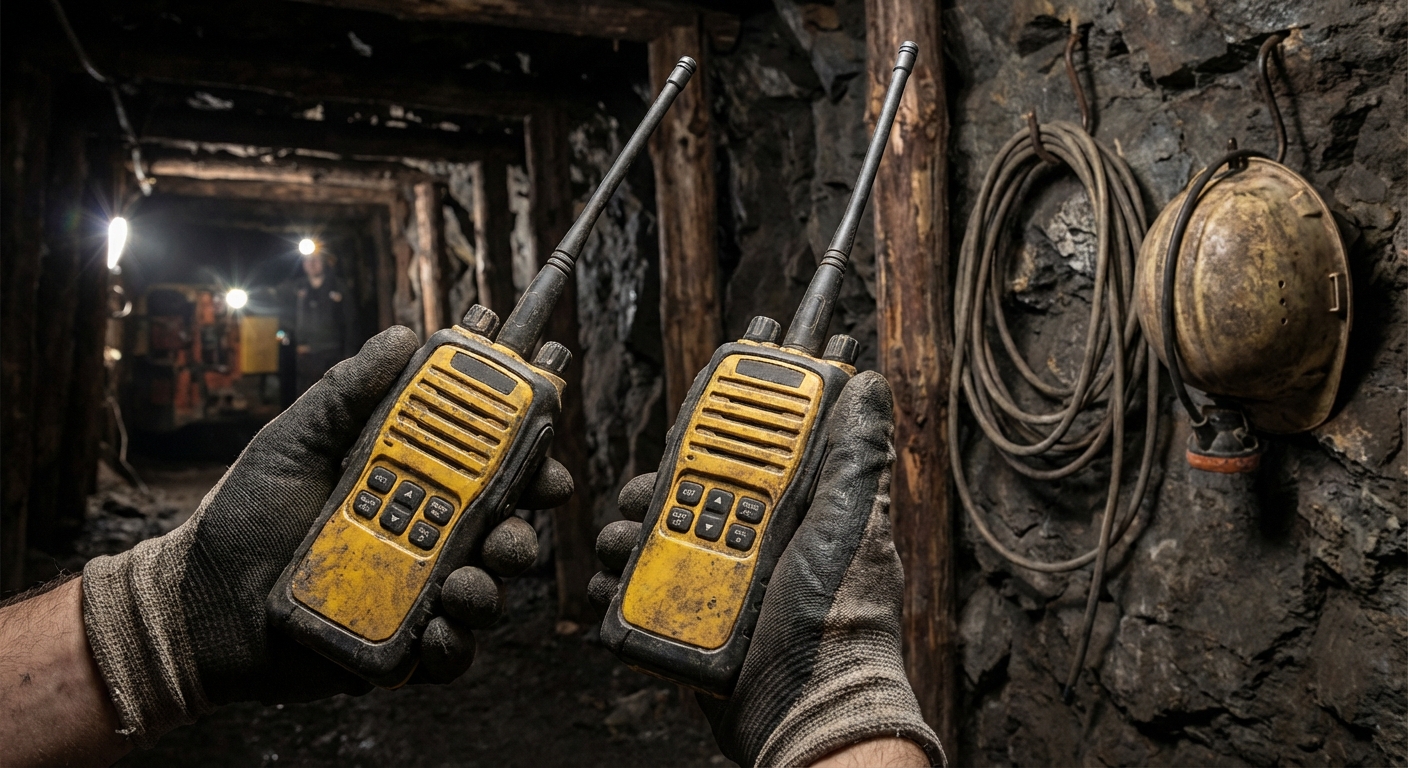
The question isn't whether communication matters. It's whether your radios can handle what the mine throws at them. Rock walls that kill signals. Dust that clogs vents. Moisture that corrodes contacts. And the constant threat of explosive gases that turn the wrong spark into a disaster. That's the reality underground, and that's why specialized two way radios aren't optional—they're the baseline.
Rock and Metal Kill Standard Signals
Most commercial radios are designed for open air or light construction environments. They assume line of sight, minimal interference, and maybe a few walls. Underground mining laughs at those assumptions. Thick layers of earth and metal infrastructure create dead zones faster than you can map them. A standard radio might work in the main shaft, but three turns into a drift? You're talking to yourself.
Specialized mining radios solve this with higher power outputs, directional antennas, and repeater systems that bounce signals through the tunnels. They're engineered to push through obstacles that would stop consumer-grade equipment cold. If your crew can't reach each other when it matters, the radio isn't doing its job—and neither is your safety plan.
Durability Isn't a Feature, It's a Requirement
Underground mining is brutal on equipment. Radios get dropped, knocked against walls, covered in dust, and exposed to moisture that seeps into everything. A device that can't survive a shift won't survive a week. Mining radios are built with reinforced housings, sealed ports, and components rated for impact and ingress protection. They're tested against standards that assume abuse, not careful handling.
We've seen operations try to save money with cheaper radios. They end up spending more on replacements and dealing with communication failures at the worst possible times. The upfront cost of rugged, mining-grade equipment pays for itself the first time it survives a fall that would have killed anything else.
Intrinsically Safe Means More Than Tough
Some mines operate in environments where flammable gases or combustible dust are present. In those conditions, a radio that sparks—even once—can trigger an explosion. Intrinsically safe radios are designed to prevent ignition under any circumstance. They limit electrical energy, use special materials, and undergo rigorous certification to ensure they won't become a hazard.
This isn't about being cautious. It's about meeting regulatory requirements and protecting lives. If your mine has explosive atmospheres, non-certified equipment isn't just risky—it's illegal. The right radios carry certifications like ATEX or IECEx, proving they've been tested and approved for hazardous locations.
Battery Life Can't Be an Afterthought
Shifts underground run long, and charging opportunities are limited. A radio that dies halfway through a shift leaves your crew isolated and your operation vulnerable. Mining radios come with extended battery packs designed to last 12 hours or more under continuous use. Some systems even support hot-swappable batteries, so you can replace power without shutting down communication.
Battery performance also degrades in extreme temperatures. Cold environments slow chemical reactions, while heat accelerates wear. Mining radios account for this with battery chemistry and thermal management that keeps power consistent, whether you're in a freezing drift or near heat-generating equipment.
Noise Cancellation Cuts Through the Chaos
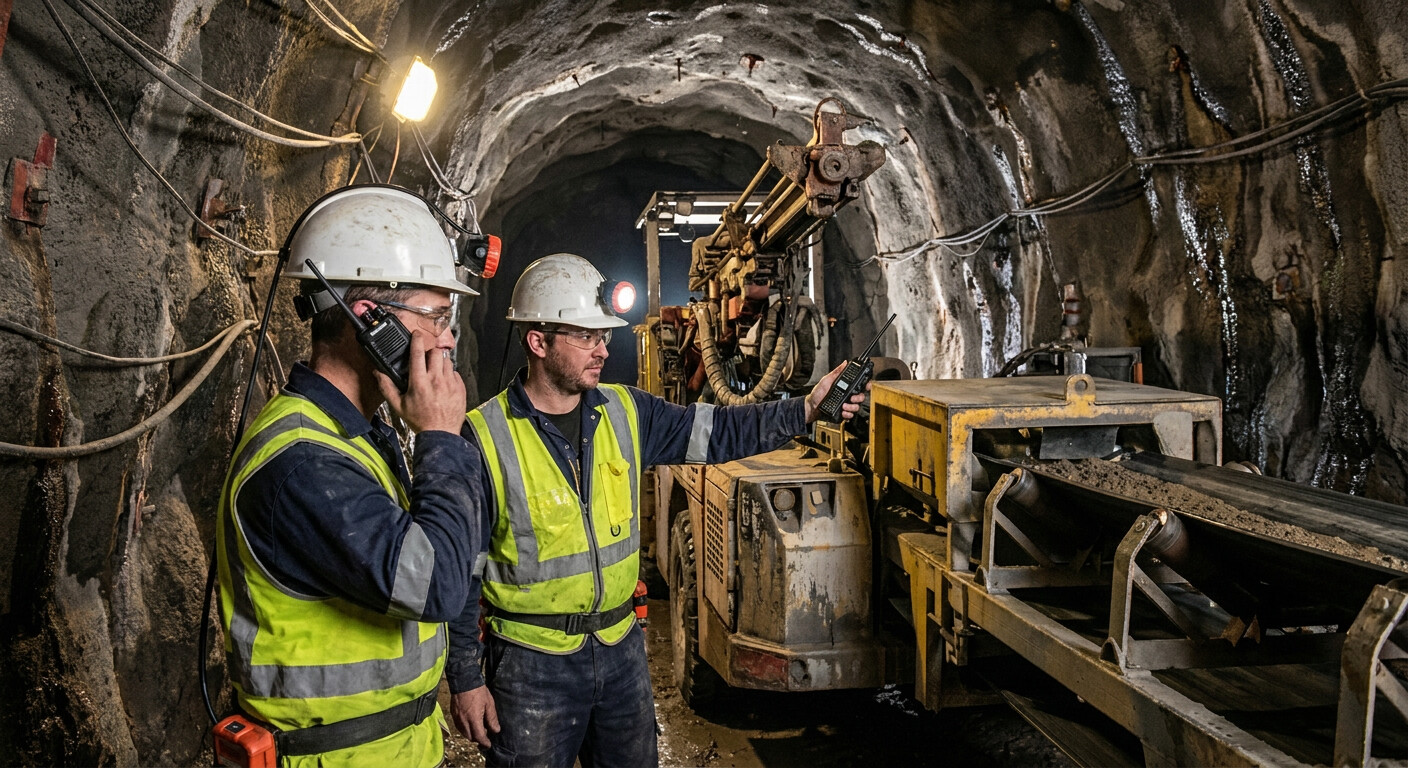
Underground mines are loud. Drills, ventilation fans, loaders, and blasting create a constant roar that drowns out normal speech. Standard radios pick up all that noise and noise and transmit it along with your voice, making communication nearly impossible. Mining radios use advanced noise-cancelling microphones and digital signal processing to filter out background sound and deliver clear audio.
This isn't a luxury—it's a necessity. When someone reports a hazard or calls for help, you need to hear every word the first time. Repeating messages wastes time and increases the chance of misunderstanding. Clear audio saves seconds that can save lives.
Emergency Features That Actually Work
Mining radios often include dedicated emergency buttons, man-down alerts, and lone worker monitoring. These features detect when someone hasn't moved for a set period or when they've manually triggered an alarm. The radio then broadcasts an alert with location data, allowing rapid response.
GPS and tracking systems integrated into mining radios provide real-time location data, even underground. This requires infrastructure like leaky feeder cables or mesh networks, but the payoff is knowing exactly where every crew member is at any moment. In an emergency, that information is the difference between a fast rescue and a prolonged search.
What to Look for When You're Buying
Not every mining radio is built the same, and not every mine needs the same features. Start by assessing your environment. How deep are your operations? What's the layout of your tunnels? Are there explosive gases or dust? What's the typical shift length? These factors determine which features matter most.
Key considerations include:
- Power output and range: Higher wattage and repeater compatibility extend coverage in deep or complex mines.
- Intrinsic safety certification: Required for hazardous atmospheres, non-negotiable in regulated environments.
- Durability ratings: Look for IP67 or higher for dust and water resistance, plus military-grade drop testing.
- Battery capacity: Minimum 12-hour runtime, with options for extended or swappable packs.
- Audio quality: Noise cancellation and loud speakers that cut through ambient sound.
- Emergency features: Man-down alerts, emergency buttons, and location tracking.
Compliance Keeps You Operating
Mining regulations vary by region, but most jurisdictions require specific communication standards for underground operations. Using non-compliant equipment can result in fines, shutdowns, or worse—liability in the event of an accident. Mining radios that meet MSHA, ATEX, IECEx, or other relevant standards ensure you're covered legally and operationally.
Compliance isn't just about avoiding penalties. It's about demonstrating that you've taken reasonable steps to protect your crew. When auditors or inspectors review your operation, certified equipment shows you're serious about safety. It also protects you in legal proceedings if something goes wrong.
The Cost of Cutting Corners
We've seen operations try to make do with consumer-grade radios or outdated equipment. The savings are short-lived. Radios fail, communication breaks down, and productivity suffers. Worse, when an emergency happens and the radios don't work, the consequences can be catastrophic.
Investing in proper mining radios isn't an expense—it's insurance. The cost of a quality radio system is a fraction of what you'd pay for a single serious incident. Lost time, medical costs, legal fees, and reputational damage all dwarf the price of doing it right the first time.
Your Crew Deserves Equipment That Works
Underground mining is hard enough without wondering if your radio will work when you need it. Your crew depends on reliable communication to stay safe, coordinate work, and respond to emergencies. Giving them Kenwood radios or Motorola radios designed for the environment isn't just good practice—it's the only responsible choice. The mine doesn't care about your budget or your timeline. It only responds to preparation, and that starts with equipment that can handle the job.
Let’s Make Underground Communication Safer
We know how critical it is to keep your team connected and protected below ground. Let’s work together to ensure your operation has the right radios for every shift, every challenge, and every emergency. If you’re ready to upgrade your communication or have questions about the best solutions for your mine, call us at 800-523-1579 or contact us today—we’re here to help you keep your crew safe and your mine running smoothly.
‹ Back
Recent Posts
-
Best Two-Way Radio Systems for Rock Quarries & Aggregate Operations
October 13, 2026
-
Two-Way Radios vs. Cell Phones - Which Is Better for Farm Communication?
September 29, 2026
-

Can One Two-Way Radio System Cover Multiple Farms & Fields?
September 15, 2026
-

Do Farms Need an FCC License for Two-Way Radios?
September 1, 2026
-
When Should Mine Page Phones Be Serviced or Replaced?
August 18, 2026