

Is Your Two Way Mining Radio Losing Battery Life Fast?
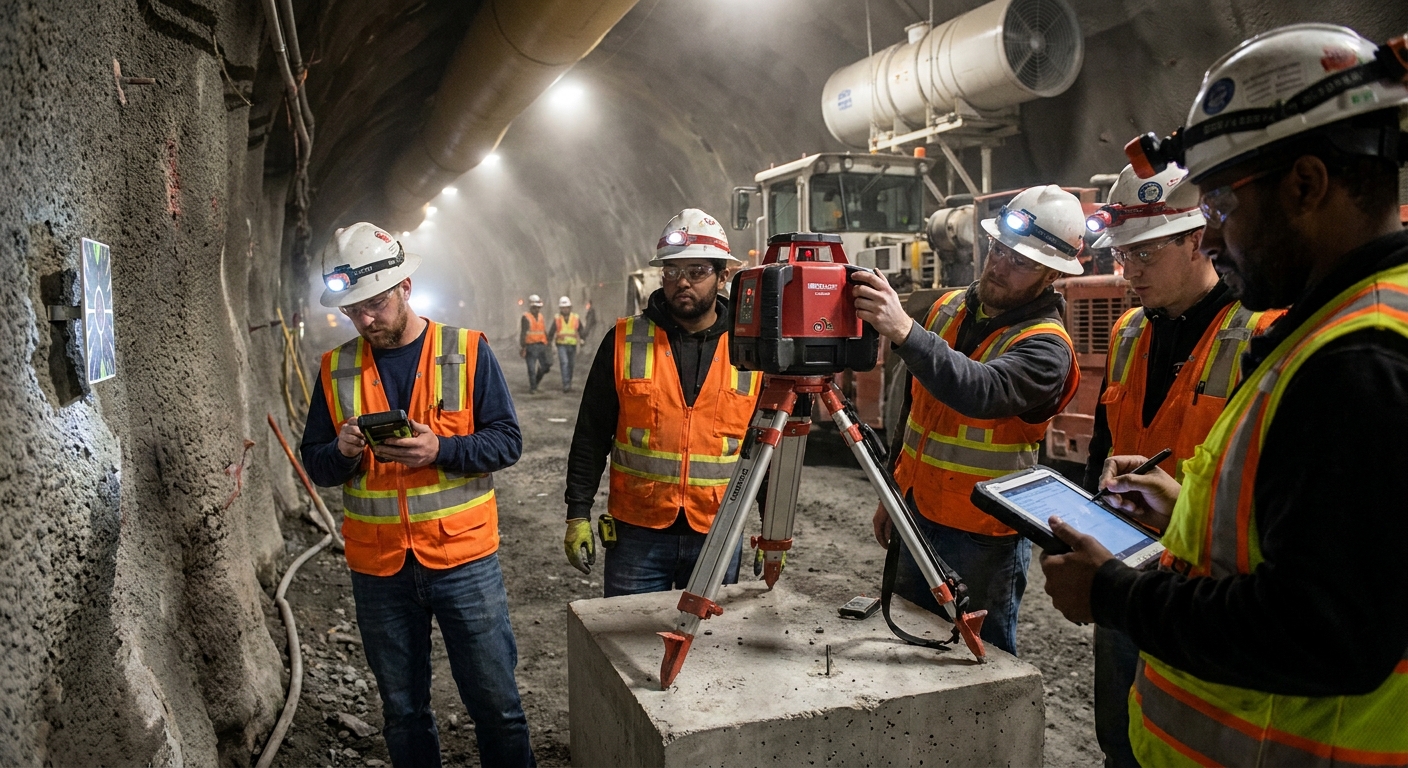
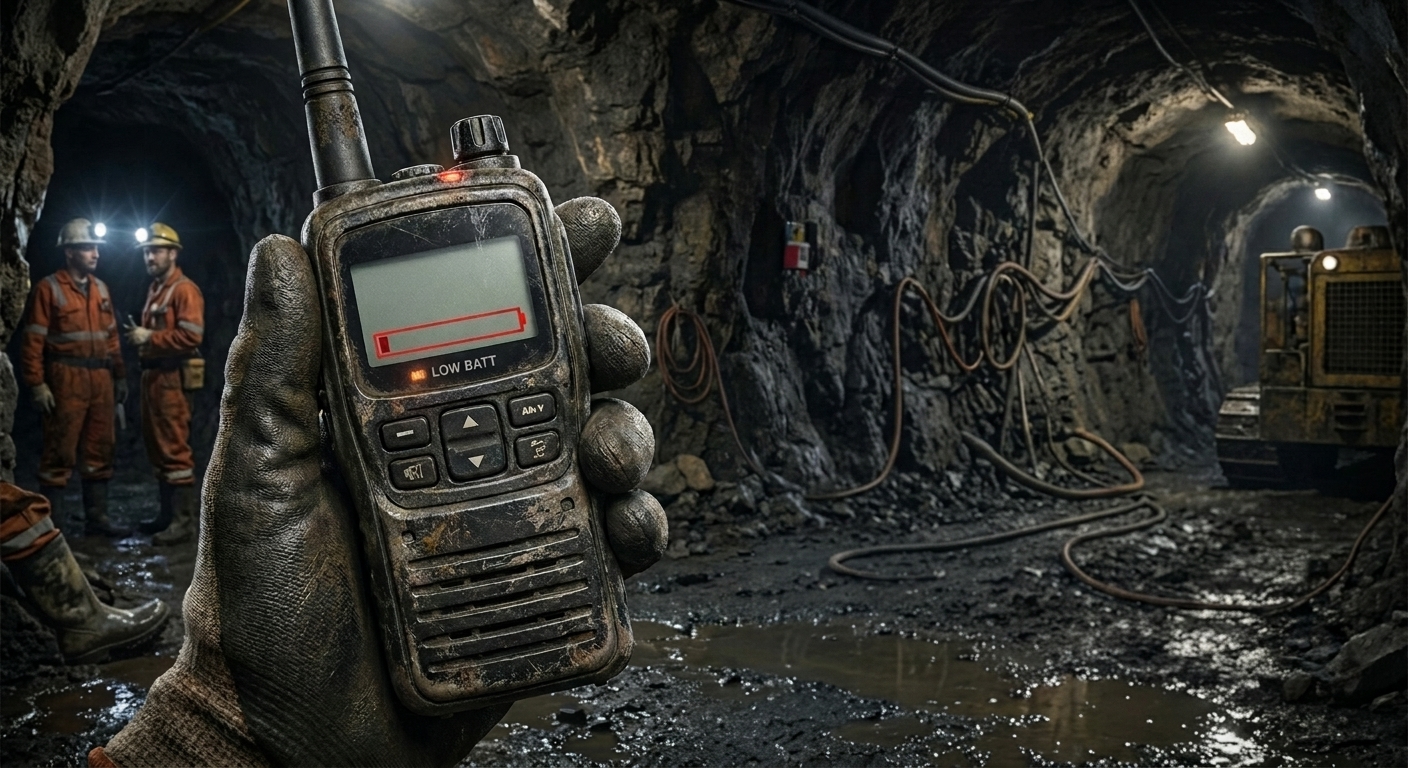
Underground work demands constant communication. Every shift depends on clear signals and functional equipment. But when your two way mining radio starts dying halfway through the day, you've got a problem that goes beyond inconvenience. Battery failure isn't just frustrating—it's a safety risk. And if you're replacing batteries every few months or constantly searching for charging stations, you're spending money you shouldn't have to.
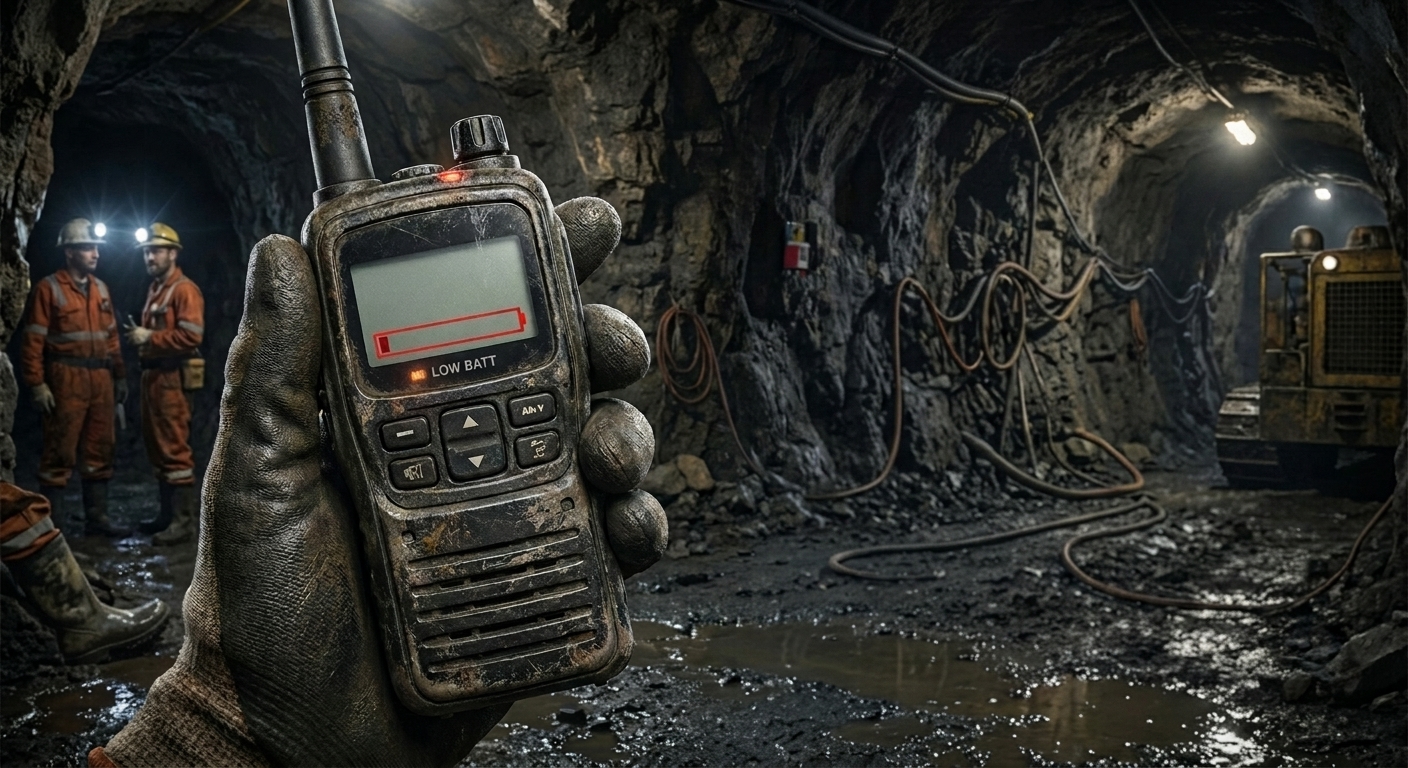
Most operators assume the battery just wore out. Sometimes that's true. But more often, the drain comes from fixable issues—environmental stress, poor charging habits, or equipment settings nobody thinks to adjust. We've seen radios written off as defective when the real culprit was something as simple as a dirty contact or a charger left plugged in overnight.
Why Mining Radios Drain Faster Than Others
Mining environments are brutal on electronics. The combination of dust, moisture, temperature swings, and constant vibration pushes batteries harder than office or warehouse use ever could. Your radio isn't failing because it's cheap—it's working overtime just to stay functional.
Add in the constant transmission demands of underground work, where signals bounce off rock and metal, and you're asking the battery to deliver maximum output in some of the worst conditions possible. That's not a flaw. That's physics. But understanding what's happening gives you control over how to fix it.
- High transmission power drains cells faster when signal penetration is required through rock or metal structures
- Temperature extremes reduce chemical efficiency inside lithium-ion and nickel-metal-hydride cells
- Dust and moisture create micro-shorts across terminals, leaking power even when the radio appears off
- Repeated shock and vibration degrade internal cell structure over time, reducing capacity without visible damage
- Continuous scanning or monitoring modes consume power at rates many users don't account for
Charging Mistakes That Kill Batteries Early
We've watched crews destroy perfectly good batteries by leaving them in gang chargers for days at a time. Overcharging generates heat, which degrades cell chemistry. Undercharging creates memory effects in certain battery types. Using the wrong charger altogether can fry the protection circuitry or deliver inconsistent voltage that wears out the cells unevenly.
Your charging routine matters more than the battery brand. If you're plugging in whenever it's convenient rather than following a consistent cycle, you're shortening lifespan. And if multiple people share equipment without tracking charge history, you're flying blind on battery health.
- Gang chargers left on indefinitely cause thermal stress that accelerates degradation
- Mixing battery types or brands in shared charging stations creates uneven power delivery
- Charging in hot environments compounds heat damage from the charging process itself
- Failing to clean contacts before charging creates resistance that forces the charger to push harder
- Using aftermarket chargers without proper voltage regulation can overcharge or undercharge unpredictably
Transmission Habits That Burn Through Power
Every second you hold down that push-to-talk button, you're draining the battery at maximum rate. Long transmissions might feel thorough, but they're wasteful. Short, clear messages conserve power and improve communication efficiency. If your team is chatting on the radio like it's a phone call, you're burning through batteries faster than necessary.
Poor signal areas make this worse. When the radio has to boost output to maintain connection, it's pulling more current from the battery. You can't always avoid dead zones, but you can adjust power settings or reposition to stronger signal areas when possible. Small changes in transmission behavior add up over a shift.
- Holding transmission longer than five seconds per message wastes power without improving clarity
- Broadcasting at maximum power in areas where lower settings would suffice drains cells unnecessarily
- Scanning multiple channels continuously uses more power than monitoring a single assigned frequency
- Background noise triggers voice-activated transmission, causing the radio to transmit when you're not even speaking
Environmental Factors You Can Control
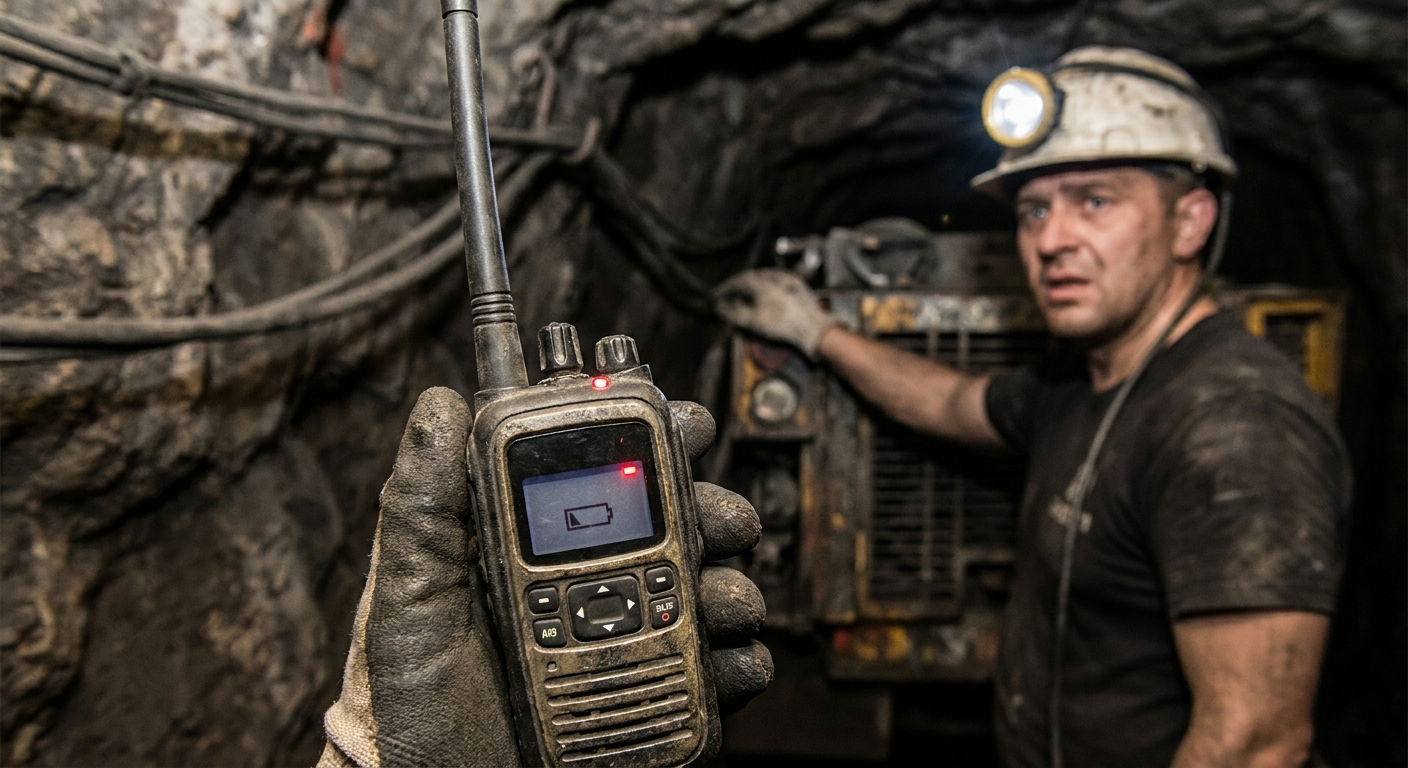
Cold reduces battery capacity. Heat accelerates chemical breakdown. Dust creates conductive paths that leak current. Moisture corrodes contacts and creates shorts. You can't eliminate these factors underground, but you can minimize their impact with proper storage and handling.
Batteries perform best at room temperature. If you're storing radios in vehicles or unheated areas between shifts, you're starting each day with reduced capacity. Bringing equipment to temperature before use helps. So does keeping radios in protective cases that buffer against shock and contamination.
- Store radios and spare batteries in climate-controlled areas when off shift
- Use protective cases that seal out dust and moisture without trapping heat
- Clean battery contacts weekly with approved contact cleaner to remove conductive residue
- Allow cold batteries to warm gradually before charging to prevent condensation damage
- Rotate battery stock so older units get used before newer ones, preventing shelf degradation
When Replacement Beats Repair
Batteries don't last forever. If yours is over two years old or has been through hundreds of charge cycles, replacement is cheaper than troubleshooting. Degraded cells won't hold a full charge no matter how carefully you treat them. Trying to squeeze extra life out of a dying battery just leaves you stranded mid-shift.
Watch for sudden drops in runtime or radios that die without warning. Those are signs of cell failure, not user error. Genuine replacement batteries cost more upfront but deliver consistent performance. Cheap knockoffs might fit the radio, but they rarely match the capacity or durability of OEM units. We've seen too many operations waste money on discount batteries that fail within months.
Better Gear Solves Battery Problems
Older radios use more power for the same performance. Newer models feature improved battery chemistry, more efficient amplifiers, and better power management. If your fleet is five years old or more, upgrading delivers better battery life along with improved audio quality and durability. The return on investment shows up in fewer replacements and less downtime.
Radios aren't dying faster than they used to. Mining work just demands more from them than ever before. Proper care, smart charging, and realistic expectations about battery lifespan keep your communication running. But when equipment reaches the end of its service life, replacement beats frustration. You can't afford dead radios underground, and you shouldn't have to manage around failing batteries every shift. Choosing Kenwood radios or Motorola radios designed specifically for mining environments ensures reliable performance and extended battery life in the toughest conditions.
Stay Powered Up and Connected
We know how critical reliable communication is for every mining operation. If battery issues are slowing your team down or putting safety at risk, let's work together to find the right solution. Give us a call at 800-523-1579 or contact us today so we can help keep your radios running strong and your crew connected underground.
‹ Back
Recent Posts
-

Can One Two-Way Radio System Cover Multiple Farms & Fields?
September 15, 2026
-

Do Farms Need an FCC License for Two-Way Radios?
September 1, 2026
-
When Should Mine Page Phones Be Serviced or Replaced?
August 18, 2026
-
Is Your Two Way Mining Radio Losing Battery Life Fast?
August 4, 2026
-