


Can Two-Way Radios Keep Farm Crews Connected During Harvest?
Harvest season doesn't care about your phone signal. When combines are running full tilt across three hundred acres and grain trucks need to know exactly where to be in five minutes, waiting for a call to connect isn't just annoying—it's expensive. Most farm operations already know communication breaks down under pressure. Equipment stalls. Trucks show up late. Crews guess instead of knowing. Two-way radios solve that problem faster than anything else on the market.
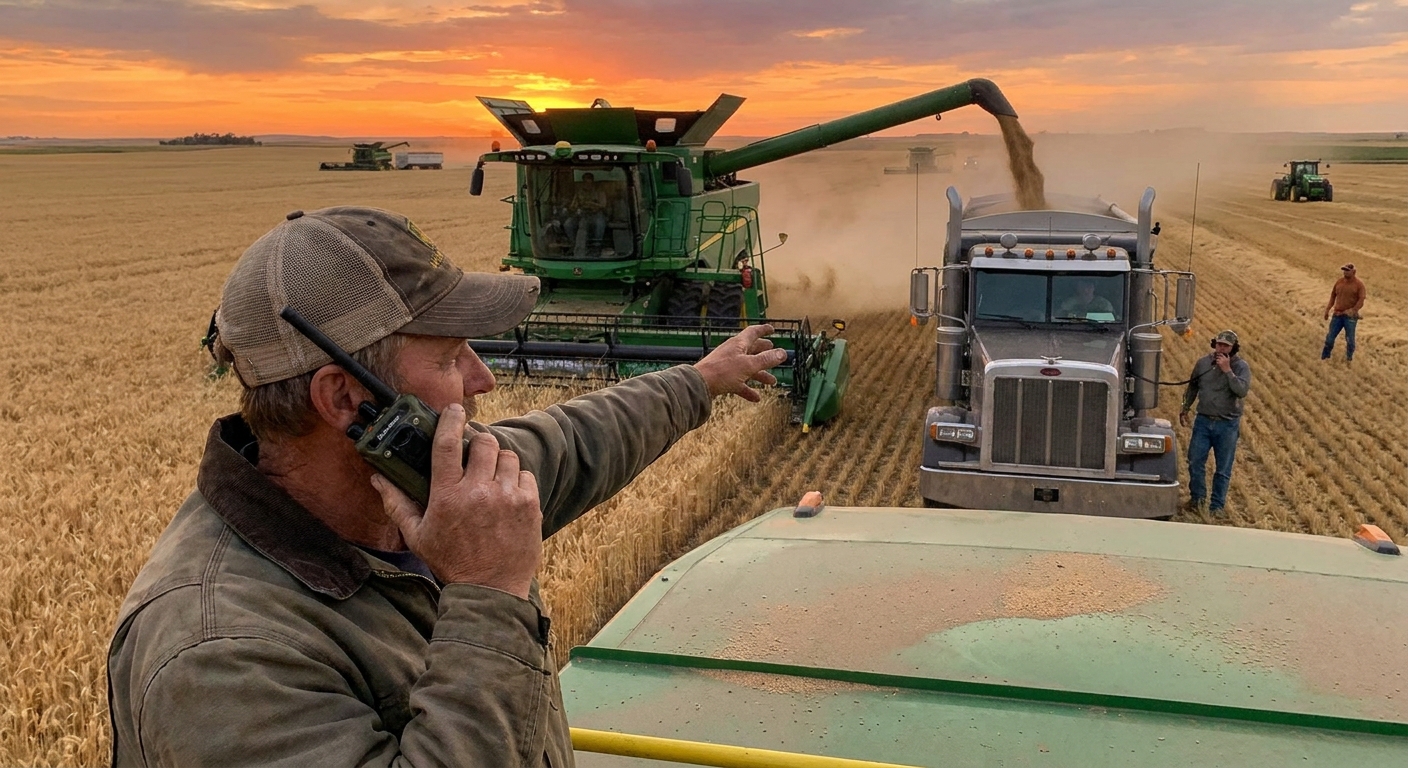
So here's what matters. If you're coordinating multiple teams across serious acreage, radios aren't optional—they're infrastructure. Push a button, speak, done. No dropped calls. No dead zones. No excuses when timing determines whether the crop gets in before the weather turns.
Cell Service Fails When You Need It Most
Rural coverage is a gamble. Even the best carriers leave gaps, especially once you move beyond the main roads. And during harvest, you're not parked near a tower—you're deep in fields where bars disappear and calls drop mid-sentence. Relying on a phone to coordinate hauling schedules or emergency repairs means accepting delays you can't afford.
Radios cut through all of that. They work on dedicated frequencies that don't depend on carrier infrastructure. Range can stretch for miles with the right equipment, and repeaters extend that even further if your operation demands it. When seconds count, instant communication isn't a luxury—it's baseline.
Built for the Beating Farms Deliver
Farm equipment takes abuse, and so does everything attached to it. Radios designed for agriculture are built rugged—dustproof, water-resistant, drop-tested. They're not fragile consumer gadgets. They're tools that survive mud, impact, and twelve-hour days without complaint.
Battery life backs that up. Most modern units run twelve to twenty-four hours on a single charge, meaning your crew isn't scrambling for outlets mid-shift. Durability and reliability aren't bonuses—they're requirements when equipment downtime costs you thousands per hour.
What Radios Actually Do During Harvest
Coordination happens in real time or it doesn't happen at all. When a grain cart fills, the operator radios the truck driver immediately—no texting, no missed calls. When a combine throws a code or a hydraulic line blows, maintenance knows within seconds. That's the difference between a fifteen-minute fix and an hour of lost productivity while someone drives around looking for help.
Radios also let supervisors broadcast to the entire crew at once. Weather updates, schedule changes, safety alerts—everyone hears it simultaneously. No playing telephone across multiple vehicles. No confusion about who got the message and who didn't.
Why Group Communication Beats One-on-One
Harvest isn't a series of isolated tasks—it's a system where every role depends on the others. Radios handle that naturally:
- Combine operators update truck drivers on fill rates and next locations
- Haulers confirm delivery times and coordinate with grain elevator schedules
- Supervisors monitor progress and adjust plans based on field conditions
- Maintenance crews respond to breakdowns without waiting for someone to track them down
- Safety officers broadcast hazard warnings across all channels instantly
Single-channel group calls mean efficiency scales with your operation. The bigger the crew, the more valuable instant, simultaneous communication becomes.
Safety Stops Being Theoretical
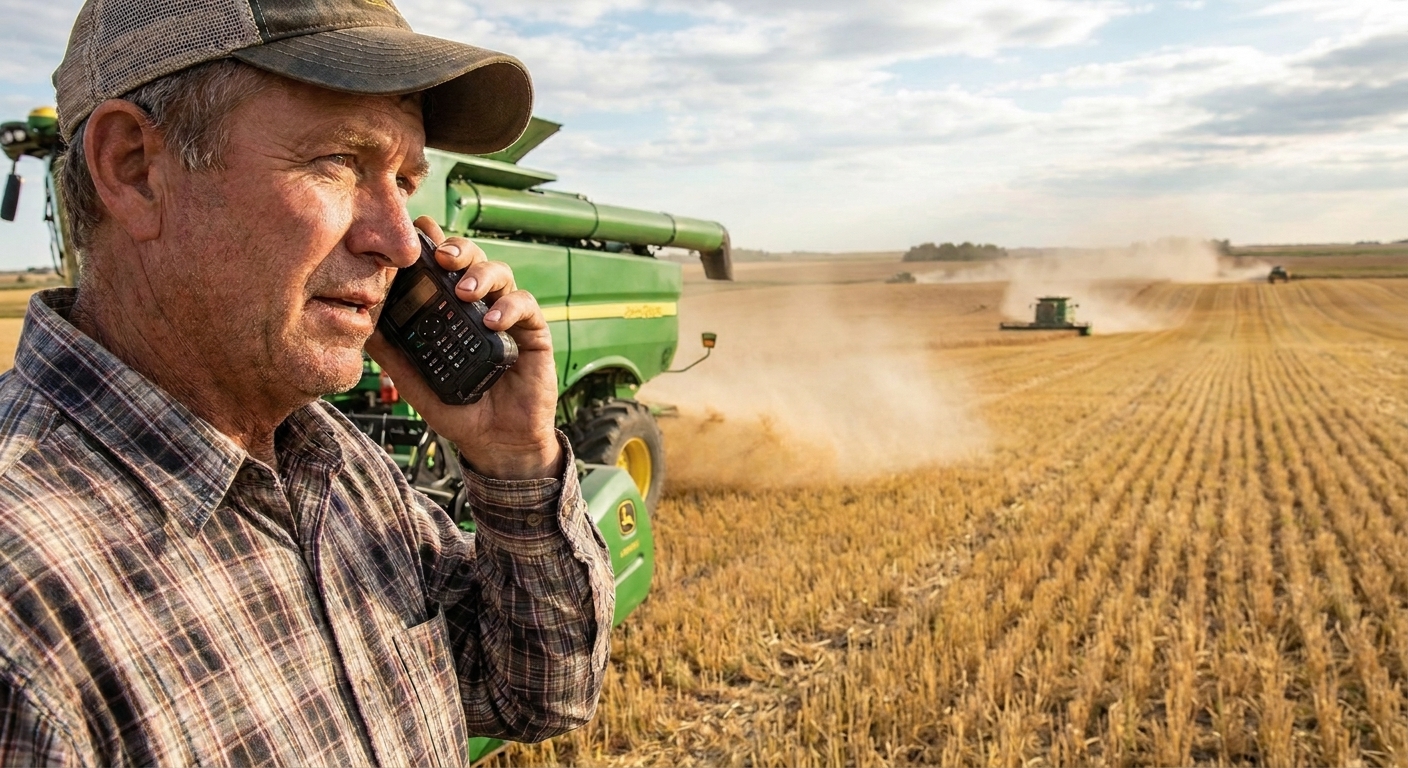
Emergencies don't announce themselves politely. Equipment fires, medical issues, rollovers—these situations demand immediate response. A radio lets anyone on the crew call for help the second something goes wrong, and everyone hears it. Response times drop from minutes to seconds, and that gap often determines outcomes.
Hands-free accessories make safety even tighter. Headsets and speaker mics let operators stay in constant contact without taking their hands off controls or their eyes off the job. Communication becomes automatic instead of an afterthought.
Handling Interference and Privacy Concerns
Modern radios offer multiple channels and privacy codes to eliminate cross-talk with neighboring farms. Digital models go further with encrypted transmissions and clearer audio. Interference isn't the problem it was a decade ago—equipment has caught up.
Cost is the other hesitation. Yes, there's an upfront investment. But compare that to one hour of combine downtime or a truckload of grain sitting in a field because nobody could coordinate the pickup. Most operations see payback within the first season, especially when you factor in reduced mistakes and faster problem resolution.
Picking Equipment That Matches Your Operation
Not all radios are created equal, and your farm's needs dictate the specs. Consider these factors before buying:
- Range requirements based on total acreage and terrain
- Weather resistance ratings for dust, moisture, and temperature extremes
- Battery capacity relative to shift lengths and charging access
- Compatibility with headsets, speaker mics, and other accessories
- Channel options and privacy features to minimize interference
Working with a reputable dealer helps you avoid overpaying for features you won't use or underspending on capabilities you desperately need. Match the tool to the job, not the other way around.
Radios Work Because Everything Else Doesn't
Harvest demands precision under pressure. Communication failures ripple through the entire operation—missed schedules, wasted fuel, damaged equipment, lost revenue. Radios eliminate that weak link. They're simple, reliable, and purpose-built for exactly the conditions farms operate under.
The question isn't whether radios can keep farm crews connected during harvest. They already do, on operations that understand communication isn't optional when margins are tight and windows are short. The real question is whether you're willing to keep gambling on tools that fail when you need them most—or whether you're ready to invest in infrastructure that actually works when the pressure's on.
Let’s Get Your Crew Talking
We know how critical every minute is during harvest, and seamless communication can make all the difference. If you’re ready to equip your team with radios that work as hard as you do, let’s talk about the right solution for your farm. Call us at 800-523-1579 or contact us today to get started.
‹ Back
Recent Posts
-
Can Two-Way Radios Keep Farm Crews Connected During Harvest?
November 23, 2026
-
How to Improve Two-Way Radio Coverage Across a Large Quarry
November 9, 2026
-
Why Two-Way Radios Lose Coverage Around Quarry Highwalls & Pits
October 27, 2026
-
Best Two-Way Radio Systems for Rock Quarries & Aggregate Operations
October 13, 2026
-
Two-Way Radios vs. Cell Phones - Which Is Better for Farm Communication?
September 29, 2026