


Can Older Mine Radios Still Keep Up on Busy Job Sites?
Most mine operators treat radios like hammers. If they work, they work. But underground communication isn't that simple — and if your gear can't handle the traffic, you're risking lives, not just delays. Older analog radios might power on just fine, but that doesn't mean they're equipped for the density, distance, and demands of modern mining operations. Especially when crew size climbs or interference drowns out critical alerts.
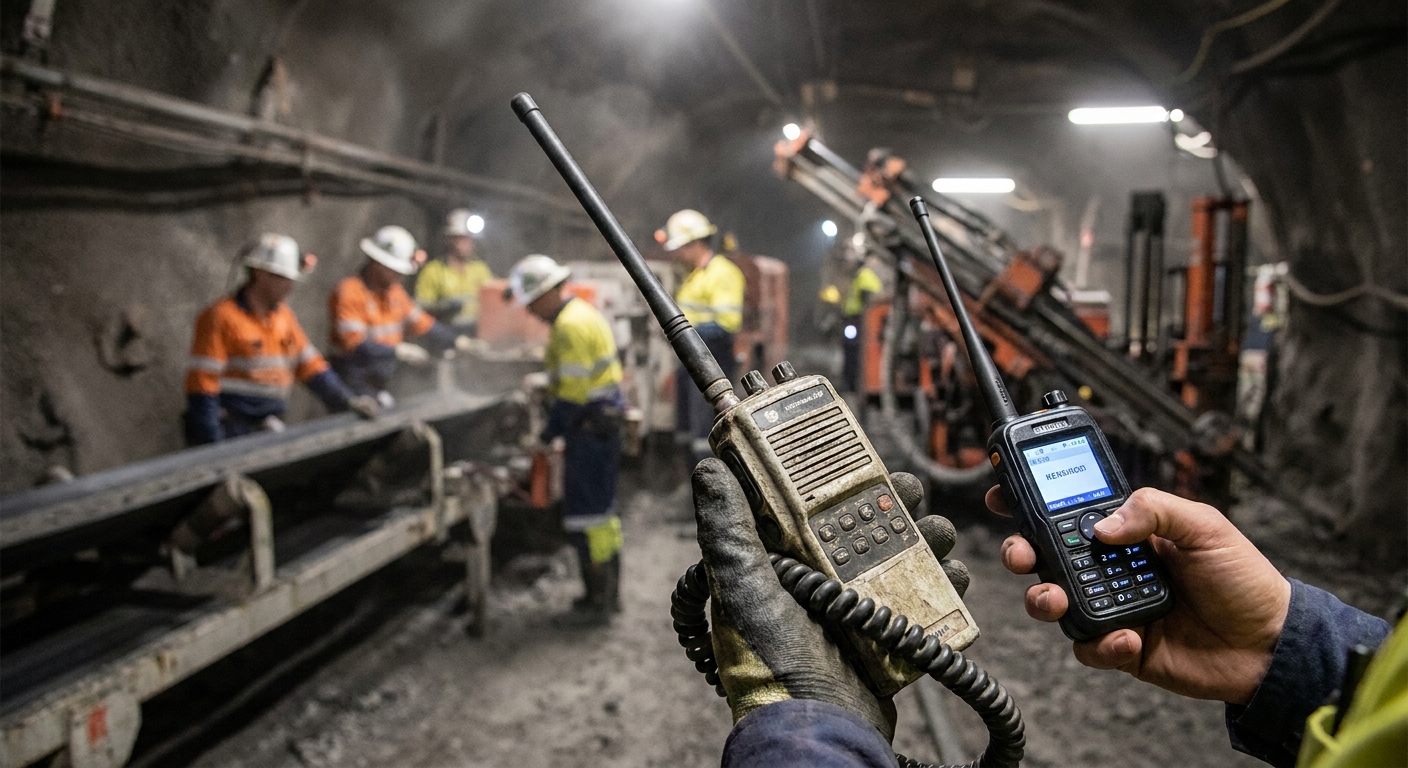
So here's what matters. If your radios are still running on tech from two decades ago, you're probably doing fine — until you're not. Every missed call should raise a flag. Every garbled transmission deserves scrutiny. And every safety decision should be rooted in whether your communication backbone can actually support the chaos happening on site — not just whether it worked last year.
Voice Clarity Falls Apart Under Load
Analog radios were built for durability, not sophistication. They'll survive drops, dust storms, and temperature swings that would brick most electronics. That's why they've lasted this long. But when multiple crews are transmitting at once, those same radios start bleeding interference. Static creeps in. Voices cut out. And the range you thought you had suddenly shrinks when rock layers or equipment get in the way.
Busy sites amplify every weakness. More people means more channel congestion. More machinery means more electromagnetic noise. And when you're coordinating blasts, haulage, or emergency evacuations, "mostly clear" communication isn't good enough. The IRS doesn't care how old your radios are — but your safety auditors will.
Digital Gear Handles Traffic Differently
Modern radios don't just sound better — they manage bandwidth smarter. Digital systems compress signals and split channels using time-division tech, effectively doubling capacity without adding frequencies. That means twice as many simultaneous conversations on the same spectrum. No extra licensing. No new towers. Just better architecture under the hood.
Here's what newer models bring to the table:
- Noise cancellation that cuts through drill noise and ventilation hum
- GPS tracking so dispatch knows exactly where every worker is in real time
- Text messaging for non-urgent updates that don't clog voice channels
- Emergency alerts that trigger automatically when a radio tilts or stops moving
- Integration with mine management software for centralized monitoring
Range Issues Surface When Sites Expand
Older radios were fine when your operation covered a few tunnels and a processing shed. But as mines grow — deeper shafts, longer drifts, more surface infrastructure — analog range starts hitting walls. Literally. Rock composition matters. Water tables matter. Even the layout of your conveyor system can create dead zones that older gear can't penetrate.
Digital radios push further with the same wattage. Their error-correction algorithms salvage weak signals that analog systems would drop. And when you add repeaters or mesh networking, coverage extends across sites that would require three times as many analog units. If you're expanding or working multi-level operations, legacy radios might already be holding you back.
Regulatory Pressure Keeps Climbing
Safety regulations don't care about your capital budget. Mines are increasingly required to log communications, track worker locations, and demonstrate rapid emergency response. Older analog radios can't do any of that without expensive retrofits — and even then, the integration is clunky at best.
Digital systems handle compliance features natively. Time-stamped voice logs. Geofenced alerts. Remote shutdown capability. If an inspector asks for proof that your comms met standard during an incident, you need more than a stack of broken radios and someone's memory. Modern gear gives you audit trails and accountability without extra paperwork.
When Upgrading Makes Sense
Not every mine needs to trash its radio fleet tomorrow. But certain red flags should trigger a serious evaluation. If you're dealing with frequent dropouts, overlapping transmissions, or complaints that crews can't hear dispatch, you're past the point where "good enough" actually is.
Consider an upgrade if you're facing any of these:
- Crew size has doubled but radio count hasn't kept pace
- You're operating across multiple levels or distant surface areas
- Safety audits flag communication gaps or compliance issues
- Maintenance costs on legacy units are eating into your budget
- You're planning expansion and current coverage barely covers existing zones
Cost Versus Capability
Upgrading a full radio fleet isn't cheap. Especially for large operations with hundreds of units in rotation. But the calculus isn't just about upfront expense — it's about what you lose when communication fails. Delayed evacuations. Miscoordinated blasts. Equipment collisions. One serious incident can cost more than a dozen new radios.
Some mines phase in upgrades, swapping out analog units as they fail or assigning digital radios to high-risk zones first. Others run hybrid systems, keeping analog for surface teams while equipping underground crews with digital gear. The strategy depends on your site, but the math is consistent: better comms mean fewer accidents, less downtime, and smoother operations.
Testing Reveals More Than Spec Sheets
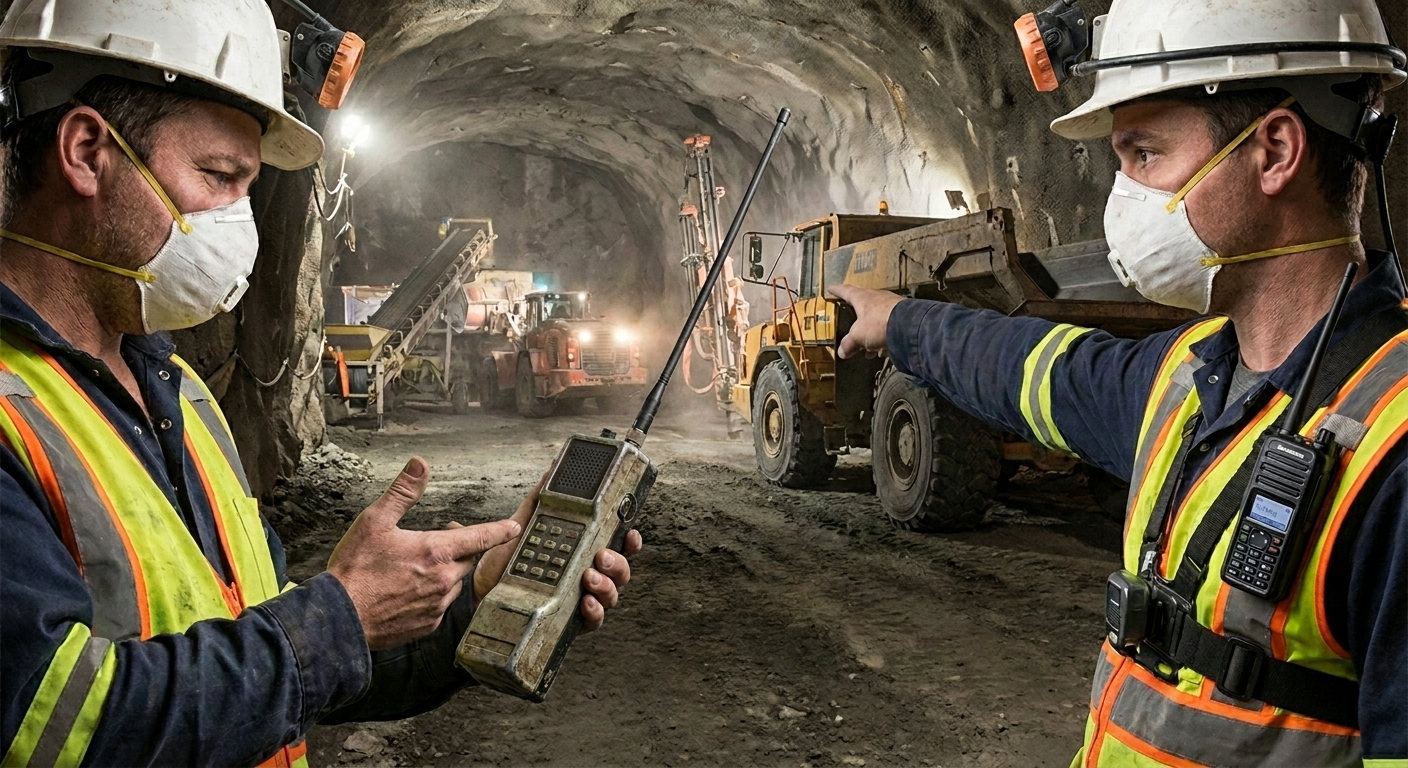
Manufacturers will promise the moon. Real-world performance is what counts. Before committing to a platform, test it on your actual site — not in a parking lot. Take units underground. Run them during shift changes when traffic peaks. Push them to the edges of your property and see where they drop.
Key factors to evaluate during testing:
- Audio clarity in high-noise areas like crushing zones or ventilation shafts
- Range across your deepest and most remote sections
- Battery life under continuous use, not just standby mode
- Ease of use for workers who aren't tech-savvy
- Reliability of emergency features under simulated stress conditions
Legacy Gear Has Limits You Can't Engineer Around
You can maintain older radios. You can replace batteries, antennas, and casings. But you can't upgrade analog signal processing to match digital standards. You can't add GPS to a unit that was never designed for it. And you can't force more channels into a frequency band that's already maxed out.
At some point, patchwork solutions cost more than new infrastructure. If your radio tech is older than half your crew, it's worth asking whether you're maintaining equipment or just delaying the inevitable. The mines that run smoothest aren't always the ones with the newest gear — but they're the ones whose gear matches the demands of the job.
What Your Documentation Should Include
Whether you stick with older radios or upgrade, you need records. Communication logs. Maintenance schedules. Incident reports tied to comms failures. If something goes wrong and your radios are questioned, you'd better have proof they were functional, tested, and appropriate for the environment.
Keep this on file for every radio in your fleet:
- Purchase date and model specifications
- Service history with repair dates and parts replaced
- Range testing results from your specific site conditions
- User training logs showing crews know how to operate and troubleshoot
- Compliance certifications for intrinsic safety or explosion-proof ratings
Where Most Operations Misjudge the Risk
Operators assume that because radios haven't failed catastrophically, they're still fit for duty. But communication degradation is gradual. You adapt to static. You repeat yourself. You work around dead zones. And before you realize it, your comms infrastructure is a liability dressed up as reliability.
The turning point usually comes during an emergency. When seconds count and the radio doesn't connect. When a mayday gets clipped by interference. When GPS would have located someone faster than a grid search. That's when the cost of outdated equipment becomes painfully clear — and it's too late to fix it retroactively.
Radios That Can't Keep Up Don't Belong Underground
Holding onto older mine radios isn't always wrong. But pretending they're still adequate when evidence says otherwise — that's where operations get dangerous. Communication gear isn't just about convenience or coordination. It's about getting everyone home at the end of the shift.
We've seen mines run smooth with analog radios and others struggle with brand-new digital systems. The difference isn't always the tech — it's whether the gear matches the site, the crew, and the complexity of the work. If your radios are slowing you down or creating gaps in coverage, that's not a maintenance problem. That's a safety problem. And those don't fix themselves.
Need reliable MSHA approved radios that handle high-traffic environments? MineSafe Electronics offers both Kenwood radios and Motorola solutions built for underground communication challenges. We also provide rebuilt equipment and repair services to extend your existing fleet's lifespan. Contact our team to discuss which communication system fits your operation.
Let’s Make Your Mine Safer and Smarter
We know how critical dependable communication is for every shift underground. If you’re questioning whether your current radios are up to the task, let’s talk about solutions that keep your crews connected and your operation running smoothly. Call us at 800-523-1579 or contact us today to get expert advice tailored to your site’s needs.
‹ Back
Recent Posts
-
Best Two-Way Radio Systems for Rock Quarries & Aggregate Operations
October 13, 2026
-
Two-Way Radios vs. Cell Phones - Which Is Better for Farm Communication?
September 29, 2026
-
Can One Two-Way Radio System Cover Multiple Farms & Fields?
September 15, 2026
-

Do Farms Need an FCC License for Two-Way Radios?
September 1, 2026
-
When Should Mine Page Phones Be Serviced or Replaced?
August 18, 2026